
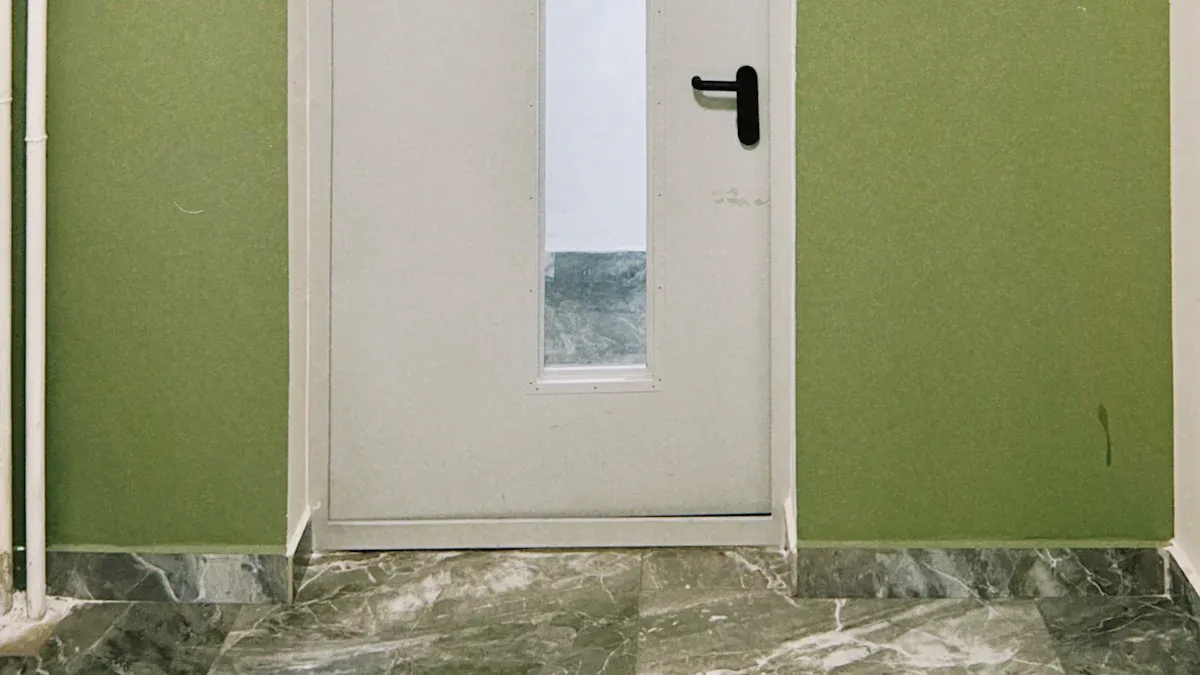
A fire door in an office building stands as a barrier designed to slow the spread of fire and smoke. You rely on fire doors to keep escape routes clear and protect lives during emergencies. When you see a fire door, you see a system that must stay closed, self-latch, and remain free from obstructions.
Many failures happen when doors have excessive gaps, missing seals, or get propped open by mistake. You help keep everyone safe by making sure each door works as intended and meets safety codes.
Key Takeaways
- Fire doors help stop fire and smoke from spreading. They keep escape routes safe. This gives people more time to get out during emergencies.
- Put fire doors in important places like stairwells and hallways. Also, put them in mechanical rooms and near exits. This helps protect people and property better.
- Use certified fire doors with the right materials and ratings. Make sure they have the correct hardware. This helps them work well and follow safety codes.
- Check and take care of fire doors often. Fix any damage or problems fast. This keeps them safe and following the rules.
- Following fire door rules helps you avoid fines. It can also lower insurance costs. Most importantly, it protects lives and property in your office building.
Fire Door Benefits
Fire Containment
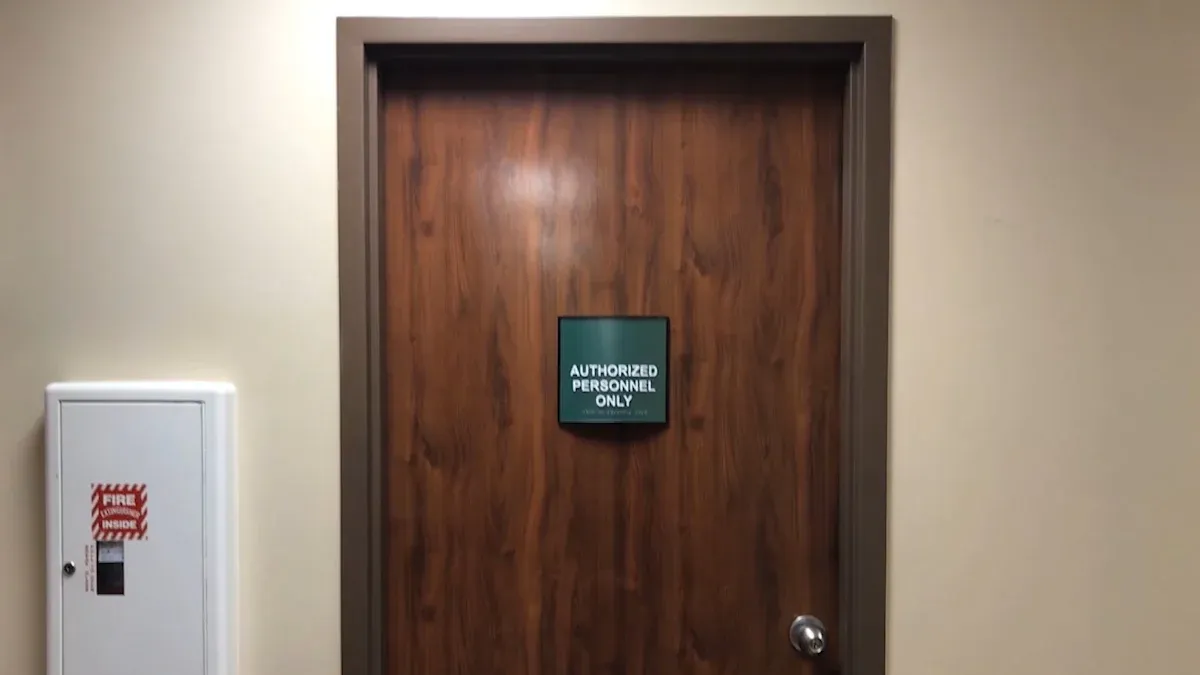
Fire doors help stop fire and smoke from spreading fast. They are made with special materials like mineral wool or vermiculite board. When there is a fire, strips around the door get bigger from heat. These strips fill in spaces and keep smoke out. Fire-rated glass and hardware help the door stay strong in high heat.
When alarms go off, fire doors shut by themselves. This keeps the fire in one spot.
You see these doors in stairwells and mechanical rooms. They stop fire from moving to other floors or important rooms. By holding back fire, people have more time to leave safely. This also helps stop big damage to the building. Good installation and regular checks keep fire doors working well.
Life Safety
Fire doors help keep you and others safe in the building. They close on their own or with help from automatic systems. Smoke detectors can make them close fast. This stops fire and smoke from getting into escape paths.
- The California Building Code says doors in smoke barriers must close when alarms or sprinklers turn on.
- National rules say pairs of swinging doors should open in different ways. This helps people get out faster.
These rules make fire doors important for safety. They give better ways to escape and help control fire and smoke. This means people are safer during emergencies.
Asset Protection
Fire-rated doors help protect things and property from fire. They keep fire, smoke, and heat away for a set time, sometimes for hours. This gives firefighters more time to help. It also keeps your office, papers, and building safer.
Insurance companies know fire-rated doors are helpful. They may lower costs for buildings with these doors because fire risk is less. For example, a factory in Ohio paid 15% less for insurance after adding fire-rated doors. A building in California saved 20% on insurance over three years after upgrades.
Keeping fire doors in good shape protects your things. You also save money on insurance and your property value can go up.
Fire Door Placement
Required Locations
Fire doors must go in certain places in office buildings. Rules from the International Building Code and NFPA say where to put them. Local officials check that you follow these rules. Fire doors protect people and property from fire and smoke.
| Mandated Fire Door Locations in Office/Commercial Buildings |
|---|
| Interior exit stairways |
| Corridors leading to occupied rooms |
| Walls separating dwelling and sleeping units |
| Walls separating tenant spaces (e.g., malls) |
| Walls separating dissimilar occupancies |
| Walls separating adjoining buildings |
| Walls subdividing buildings (e.g., office suites) |
| Walls for storage rooms and mechanical rooms |
| Walls for rooms containing sensitive equipment |
You also need fire doors at entrances, exits, and near elevator shafts. Put them between dangerous and public areas too. Even old buildings must follow these rules. Every fire door should meet today’s standards. They must pass yearly checks and stay clear of things blocking them.
Tip: Always ask your local Authority Having Jurisdiction for the latest rules for your building.
Recommended Areas
Adding more fire doors can make your building safer. Think about busy places or spots where fire could spread fast. You might want fire doors between office suites or in big open rooms. Put them near rooms with electrical panels or IT equipment.
Best ideas include:
- Put fire doors in public hallways.
- Use fire doors to keep kitchens, storage, and mechanical rooms apart from offices.
- Install fire doors where there are dangerous materials or important equipment.
- Make sure all stairway doors are fire doors.
Fire doors must stay closed to work right. Some have special parts that let them stay open but close if there is a fire. Never block or hold a fire door open. If you see a broken door, tell someone right away.
Note: In 2019, over 76% of fire doors in non-domestic buildings did not pass inspection. Most failed because they were put in wrong or held open. Checking doors often and putting them in the right places helps stop these problems.
Egress and Exits
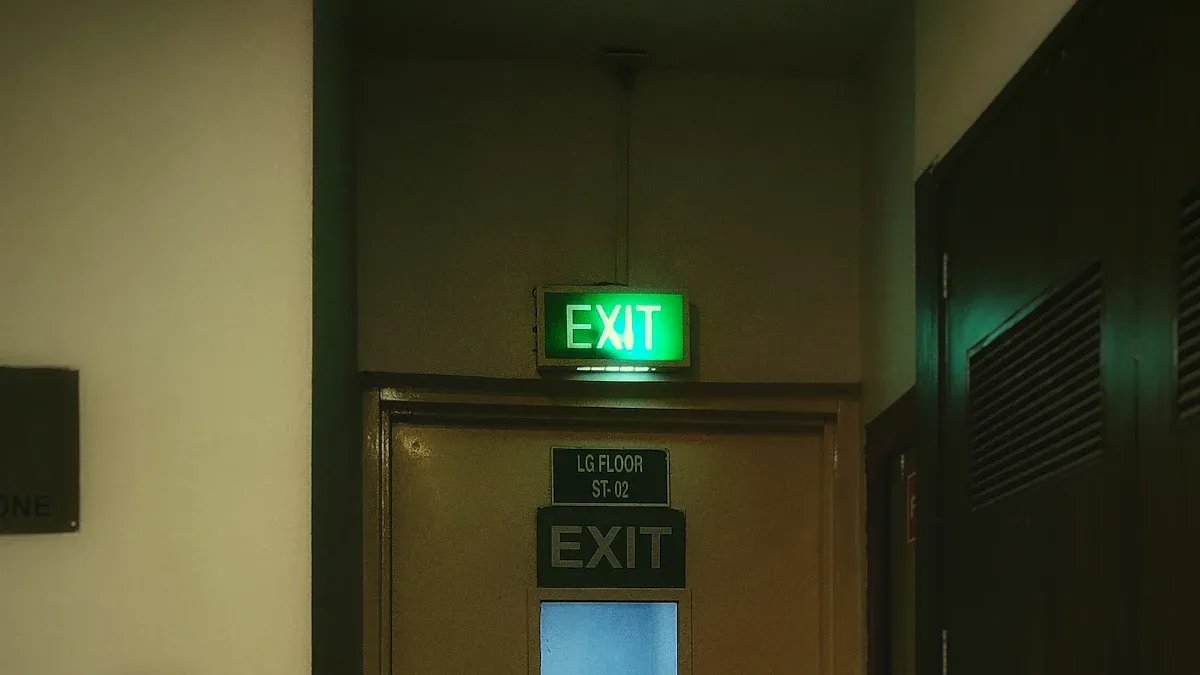
Getting out safely means having clear exit paths. Fire doors should be at all exits, stairwells, and halls that lead outside. These doors slow fire and smoke, giving people more time to get out.
- Fire doors at exits must close by themselves and have the right rating.
- Exit paths must be clear, with nothing blocking doors or halls.
- Some systems can warn you if a door is held open or blocked.
- Good signs and lights help people find exits fast in an emergency.
| Aspect | Explanation |
|---|---|
| Fire Door Function | Stops fire and smoke, keeps escape routes safe. |
| Compliance Requirements | Must close by themselves, have correct ratings, and pass checks. |
| Maintenance & Monitoring | Regular checks and staff training keep doors working and clear. |
| Impact on Evacuation Times | Good fire door placement lowers smoke and panic, helping people leave faster and safer. |
Fire doors with fail-safe locks open during emergencies so people can get out. Cloud systems can control door access and help in emergencies. Putting fire doors in the right places and checking them often helps everyone get out safely.
Fire Door Types
Materials
There are many fire door materials you can pick for your office. Each one has its own way to stop fire and special benefits. The table below shows the most common choices:
| Material | Fire Resistance Properties | Additional Features and Benefits |
|---|---|---|
| Steel | Does not burn and can stop fire for 45 minutes to 3 hours. | Strong, saves money, does not bend or rust easily. Often used with fire-resistant cores. |
| Vermiculite | Makes wooden doors better at stopping fire. | Helps doors handle weather, good for outside doors. |
| Fire-rated Glass | Types like wire mesh, ceramic, and borosilicate can stop fire for 20–90 minutes. | Lets you see through, stands up to heat and blasts, used in windows on doors. |
| Composite Doors | Made from wood plastic mixes with mineral wool or gypsum inside. | Puts out its own flames, light, strong, stays together in heat. |
| Fiberglass | Does not burn, melts above 2000°F, makes little smoke. | Used in strong plastic doors with fire-resistant cores. |
| Magnesium Oxide (Mgo) | Has a top fire rating, stands over 750°C for more than 30 minutes, cools fire by letting out water vapor. | Light, can be painted or covered, meets tough safety rules. |
Magnesium oxide boards are great because they stop fire well and cool flames by letting out water vapor. You can also make them match your building’s look.
Ratings
It is important to know how long a fire door can stop fire. Fire resistance ratings tell you this time. These ratings show how long a door blocks fire, smoke, and heat.
- Common fire door ratings are 20, 45, 60, 90, and 180 minutes.
- The wall around the door often sets the door’s rating.
- Tests include:
- Fire tests at up to 1925°F.
- Hose stream tests to see if water and shock break the door.
- Heat rise tests to check how much heat gets through.
- Smoke and draft tests to see if smoke can get past.
- Main test standards are UL 10B, UL 10C, and NFPA 252. Newer pressure tests are more like real fires.
- Some doors also pass ASTM E119 and UL 263 for whole building parts.
Always make sure your fire doors have the right rating for where they are in your building.
Features
Certified fire doors have special things to keep you safe and follow the rules:
- Fire-resistant stuff like steel, gypsum, or vermiculite inside.
- Important hardware: door closers, locks, hinges, panic bars, and smoke or intumescent seals.
- Easy-to-read fire ratings, from 20 minutes up to 3 hours.
- Follow rules from UL, NFPA, and other groups.
- Safety glass that does not break easily, so you can see and stay safe.
- Labels that show the door passed hard tests.
Doors without these things are not certified and may not keep you safe in a fire. Always pick certified fire doors for your office.
Compliance and Certification
Codes and Standards
You have to follow rules to keep your office safe. NFPA 80 is the main rule for fire doors in offices. This rule tells you how to put in, label, check, and fix fire doors. NFPA 80 says you must use labeled fire doors with set fire resistance. You need to put these doors in steel frames with fire-resistant fasteners and hardware. The rule also gives limits for fire-rated glass and door size. You must follow the maker’s steps and NFPA rules when you put in a door. This keeps the door strong against fire. You need to check and test fire doors often to follow the rules. Tests include acceptance and working tests. Only trained people should change a fire door. If you follow NFPA 80 and other rules, you keep people and things safe and avoid trouble.
Labels and Testing
Every fire door must have a clear, whole label. The label shows the fire rating, test rules, and marks for approval. Never paint over or harm these labels. If a label is gone or ruined, you must fix it fast. Inspectors look at these labels during checks. You need a trusted agency to check and approve your fire doors. Trained inspectors look at the door, frame, hardware, and wall. They make sure the door is put in right, has the right label, and works well. Checks must be done by someone with the right skills. An ‘S’ label means the door stops smoke and drafts. After the check, you get a report with what they found and what to fix.
Documentation
You must keep good records to show your fire doors are safe. Good records have:
- Date of each check and test
- Name and address of your building
- Name and skills of the inspector
- Inspector’s signature
- Record for each fire door, with where it is and what type
- Results of checks and tests
- List of any problems found
- Who will fix problems and when
- Dates and details of repairs or changes
Keep these records easy to find for safety teams and repair workers. These records show you follow NFPA 80 and local rules. They help you get ready for checks and keep your fire doors working.
Installation and Maintenance
Professional Installation
You need a skilled installer to set up a fire door in your office building. Proper installation keeps the door strong and safe. Follow these steps for best results:
- Measure the opening carefully so the door fits well.
- Use shims and a level to align the hinge side perfectly.
- Dry fit the door to check gaps and fit before final installation.
- Seal under the threshold with UL-listed fire-rated foam.
- Align the frame to the shims, not the wall, for a straight fit.
- Secure the frame with long screws into the framing.
- Apply fire-rated caulking around the frame to seal all gaps.
- Test the door swing and latch several times.
- Use only certified fire-rated parts and keep gap tolerances tight.
- Install a self-closing device so the door shuts automatically.
- Never trim or drill the door unless approved.
Tip: Always keep fire rating labels visible and never paint over them.
Inspection
You must inspect each fire door at least once a year. A licensed fire protection company or trained professional should do this. The inspection checks for damage, smooth closing, and working latches. You can do monthly checks yourself, but the annual inspection is required by law. If the door fails any part of the inspection, you must fix it before using it again.
Maintenance
Regular maintenance keeps your fire doors working and safe. Common problems include misaligned doors, broken closers, loose hinges, and damaged seals. You should:
- Adjust hinges and frames to fix alignment.
- Tighten screws and oil hinges.
- Repair or replace broken latches.
- Replace damaged seals right away.
- Make sure nothing blocks the door or holds it open.
- Check that all signs and labels are clear and correct.
Train your staff to spot problems and report them. Keep records of all inspections and repairs. This helps you stay ready for emergencies and pass safety checks.
Troubleshooting
Non-Compliance
If your fire doors do not follow the rules, you face big risks. Fire officials can fine you or even shut down your business. You could get sued or have to pay more for insurance. If a fire happens and your doors are not checked, insurance might not pay. Sometimes, your insurance can cost up to 20% more or be canceled.
Not following the rules can cause lawsuits, stop your business, and hurt your reputation.
Here are some things that can happen:
- You might get fines or even go to jail for serious problems.
- Insurance may not pay or could cost much more.
- You may need more checks, which costs extra money.
- Your building could get damaged and your work could stop.
- If someone gets hurt, you could be sued and have to pay.
Checking your fire doors often and keeping good records helps you avoid these problems. Fixing doors costs less than paying for fire damage or legal trouble.
Repairs
If you find a broken fire door, fix it fast. Make sure the door closes and latches with nothing in the way. Change or fix any broken parts like hinges, latches, or seals. The fire rating label should always be easy to see and not damaged.
Here is how to fix a fire door:
- Look for gaps, damage, or missing parts.
- Fix or change broken pieces right away.
- Make sure seals and gaskets are in place and not broken.
- Do not change anything that could ruin the fire rating.
- Write down every check and repair you do.
Teach your staff to look for problems and tell someone. Plan regular checks and use trained people for inspections.
Upgrades
New upgrades can make your fire doors safer and work better. You can add seals to stop smoke and drafts. You can put in warning lights or sounds and battery backups for power loss. Some doors can close by themselves when alarms go off.
You can also choose:
- Special fire doors that block sound and look nice.
- Strong powder coat paint to last longer and look better.
- Covers to keep out rain and dirt.
- Test stations to check doors easily from the floor.
Upgrading your fire doors keeps your building safe and looking good. It also helps you follow the newest safety rules.
You help keep your office safe by taking care of each fire door. Pick the right doors and put them in smart places. Plan regular checks to stop problems like gaps or missing seals.
Be ready by making a maintenance plan and teaching staff what to do. Work with trained experts for checks and repairs.
To follow the rules, use digital tools to keep records. Ask experts for help with checks, repairs, and safety codes. Doing these things keeps people and property safe and makes sure your building follows all safety rules.
FAQ
What should you do if a fire door will not close properly?
Check for obstructions or damaged hardware. Make sure nothing blocks the door or holds it open. If you cannot fix the problem, contact a certified fire door technician right away.
Never leave a fire door stuck open or broken.
How often should you inspect fire doors in your office building?
You must inspect fire doors at least once a year. Monthly visual checks help catch problems early.
- Annual inspections must follow NFPA 80 rules.
- Keep records of all inspections and repairs.
Can you paint or decorate a fire door?
You can paint a fire door, but never cover or remove the fire rating label. Use only approved paint. Do not drill holes or add decorations that could damage the door or seals.
What is the difference between a fire door and a regular door?
A fire door uses special materials and seals to block fire and smoke. It has a fire rating label and self-closing device. Regular doors do not have these features and will not protect escape routes during a fire.
Who can repair or replace a fire door?
Only trained and certified professionals should repair or replace fire doors. You keep your building safe and compliant by using experts.
Unqualified repairs can void the fire rating and put lives at risk.


