
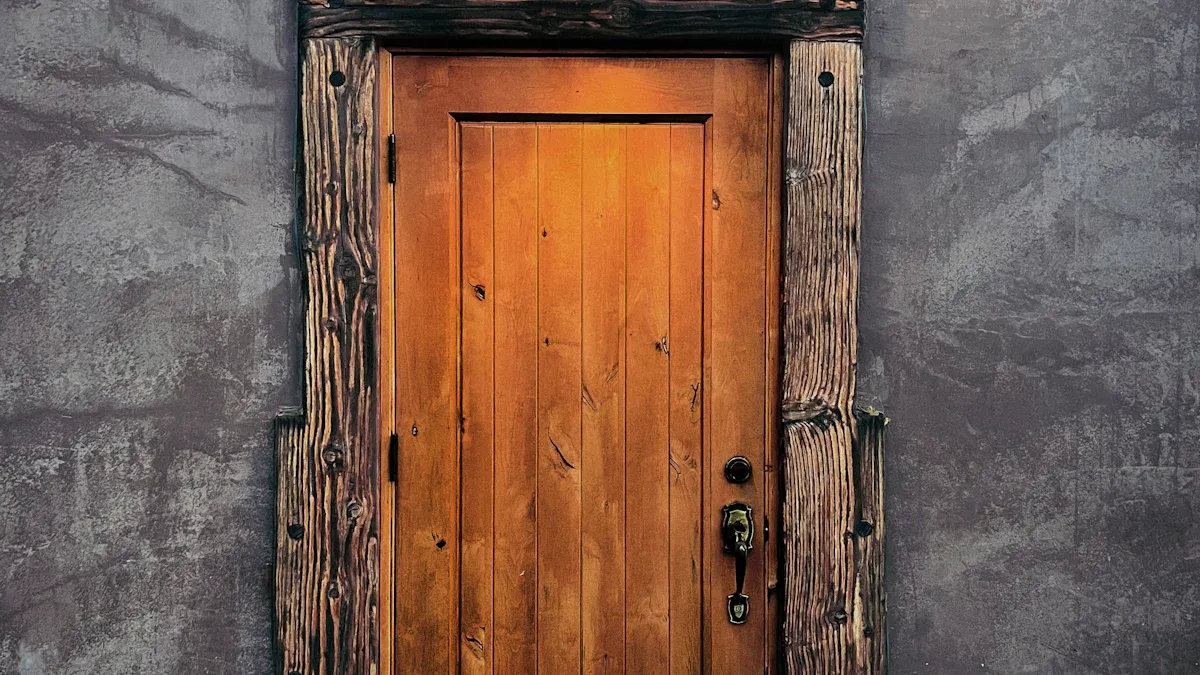
Fire doors are important for keeping people and buildings safe. They use special materials to stop fire and smoke from spreading. Steel doors are strong and meet strict safety rules, so they work well in factories. Wooden fire doors look nice and resist fire but need care often. Aluminum doors are light, don’t rust, and are easy to put in. Glass fire doors let you see through them and are safe, but they cost more and are common in new buildings.
Key Takeaways
- Fire doors are important for safety. They stop flames and smoke, giving people time to escape fires.
- Steel fire doors are tough and long-lasting. They work well in rough places like factories.
- Timber fire doors are both pretty and safe. Special treatments make them resist fire better.
- Glass fire doors let you see through while staying safe. They fit modern styles and still protect from fire.
- Checking fire doors often and following safety rules is key. This ensures they work well and save lives.
What are fire doors?
Definition and purpose
Fire doors are made to keep people safe during fires. They block flames, heat, and smoke for a set time. This gives everyone more time to leave the building safely. These doors are not just simple barriers; they are key parts of a building’s fire safety plan.
The NFPA 80-2019 standard says fire doors must follow strict rules. These rules have changed over time since starting in 1897. They explain how to design, install, and take care of fire doors. For example, they focus on preparing the site well and checking doors often to keep them working properly.
A guide by Secured by Design, the Fire Industry Association, and the Door and Hardware Federation explains fire door rules. It says factory-made doorsets are best for meeting fire safety laws. These doors must resist fire and have third-party approval to show they work well.
Importance in fire safety
Fire doors are very important for keeping people safe in fires. They stop flames, smoke, and heat from spreading fast. This slows down the fire, giving people more time to escape safely.
Many buildings must have fire doors by law to protect people inside. Fire doors also help reduce damage to property, making repairs easier and cheaper. Knowing fire doors are installed can make you feel safer. They show that steps are taken to protect lives and belongings.
Fire doors are not just regular doors; they save lives and keep people safe during emergencies.
Core materials in fire doors
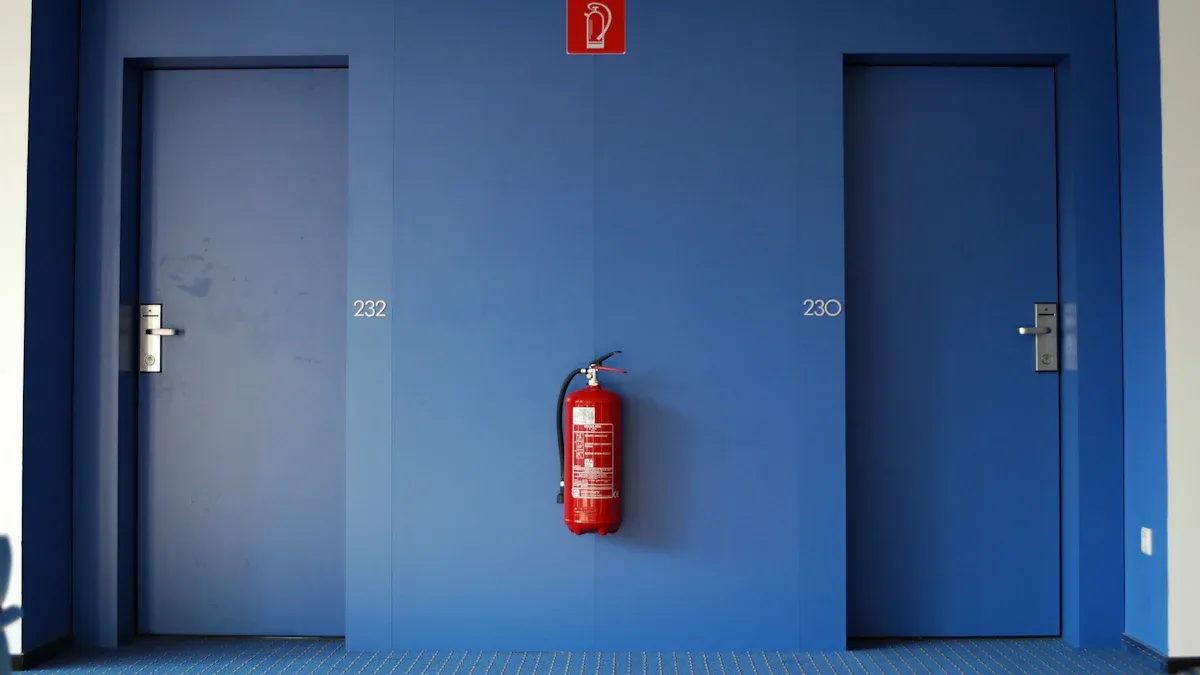
Steel and its fire-resistant properties
Steel is a strong and trusted material for fire doors. It can handle high heat without bending or breaking. This makes it perfect for factories and tough places.
Steel’s strength comes from its mix of iron and carbon. These materials make it tough and able to resist heat. Special coatings are added to steel doors to make them even better. These coatings slow down heat and stop the door from burning.
Steel fire doors last a long time and need little care. They don’t rust easily, so they stay in good shape. If you need a fire door for harsh conditions, steel is a smart pick.
Timber and fire-treated options
Timber fire doors are both pretty and fire-resistant. The wood is treated to make it better at stopping fire. These treatments help slow flames and reduce heat spread.
Different coatings on timber work in unique ways, like:
| Coating Strategy | Reduces Burning Intensity | Stops Fire Spread | How It Works |
|---|---|---|---|
| Top Surface | Medium | Medium | Slows heat transfer |
| Bottom Surface | High | High | Blocks heat rising from below |
| One Side Surface | Low | Low | Slightly slows heat transfer |
| Both Side Surfaces | High | High | Blocks heat and stops gas from burning |
New treatments use tiny particles and special chemicals. These make timber fire doors even safer. If you want a stylish and safe fire door, timber is a great choice.
Glass compounds for visibility and safety
Glass in fire doors gives safety and lets you see through. It protects against fire while keeping spaces connected. This is useful in modern buildings with open designs.
Fire-safe glass doesn’t break easily. It can handle high heat and strong impacts, keeping people safe. Brands like SAFTI*FIRST offer glass with different fire ratings for many uses.
Glass fire doors also help people feel more connected. Seeing through doors makes spaces feel open and friendly. If you want a fire door that looks good and keeps you safe, glass is a great option.
Gypsum as a heat-resistant core
Gypsum is important in making fire doors. It is a mineral that can handle heat and slow fires. When heated, gypsum goes through calcination. This process releases water vapor, cooling the area and slowing the fire.
Gypsum is often used as the core of fire doors. It gives great heat protection, helping doors last in high heat. Manufacturers use gypsum boards to make strong cores for fire doors.
Gypsum is light, so it’s easy to install. It can mix with materials like steel or wood to make better fire doors. If you need a door that resists heat well, look for gypsum.
Gypsum’s special traits make it key for safe, strong fire doors.
Aluminum for lightweight durability
Aluminum is a great material for fire doors. It is 65% lighter than steel, making it easy to move and install. Even though it’s light, aluminum is very strong, with strength up to 90,000 psi. This makes it perfect for modern fire doors.
Aluminum is flexible and lasts a long time. It doesn’t rust, so it works well in tough places. Aluminum fire doors stop fire and smoke, keeping people safe in homes and offices.
Here are some benefits of aluminum fire doors:
- Lightweight design makes them easy to use and install.
- Strong material ensures they last a long time.
- Rust resistance keeps them in good condition.
- Aluminum also blocks noise, making rooms quieter.
- It helps keep indoor spaces at a good temperature.
- It fits many building styles, making it a flexible choice.
If you want fire doors that are safe, strong, and easy to use, aluminum is a smart pick.
Aluminum fire doors are strong and practical, offering safety and style.
Additional components in fire doors
Intumescent seals for fire and smoke barriers
Intumescent seals are key to making fire doors safer. These seals grow bigger when they get hot. This creates a strong block that stops flames and smoke. It keeps fire and harmful gases from spreading, giving you more time to escape.
Intumescent seals are rated by how long they resist fire. They can last from 30 minutes to several hours. This makes them great for sealing fire doors tightly. Studies show they are very good at stopping fire dangers.
🔥 Tip: Always check the fire rating of intumescent seals. Make sure they meet your building’s safety rules.
Fire-resistant coatings for enhanced performance
Fire-resistant coatings make fire doors stronger and safer. These coatings go on the door’s surface to slow heat and stop burning. They add extra protection, helping the door stay strong during a fire.
Some coatings are paints or sprays that puff up in high heat. This puffing creates a layer that slows fire spread. Picking fire doors with good coatings makes your building much safer.
Hardware components like hinges and locks
The hardware on fire doors is very important. Hinges, locks, and latches help the door work well in a fire. Without good hardware, the door won’t close fully, making it less safe.
Rules like NFPA 80 set strict tests for fire door hardware. Hinges must be strong and fireproof. Locks and latches must keep the door shut tight. Panic bars, used for quick exits, are tested under standards like BS EN 1125 to ensure they work in emergencies.
🚪 Note: Always check that your fire door hardware meets safety standards. This ensures the best protection.
Types of fire doors
Solid core fire doors
Solid core fire doors are made to handle strong fires. Their thick cores, often using timber, gypsum, or composite, resist fire well. These doors can last up to three hours in a fire, making them great for risky areas.
Fire ratings show how long these doors resist fire. Common ratings include FD30 (30 minutes), FD60 (60 minutes), and FD120 (120 minutes). The table below explains these ratings:
| Classification | Fire Resistance (minutes) |
|---|---|
| FD30 | 30 |
| FD60 | 60 |
| FD120 | 120 |
Solid core fire doors also have smoke seals and auto-closing parts. These features block smoke and make sure the door shuts during a fire. If you want a strong and safe door, solid core fire doors are a smart pick.
Glazed fire doors
Glazed fire doors give safety and let you see through. Their glass panels have fire-resistant glazing, matching the door’s fireproof core. This design avoids weak spots and keeps the door strong in a fire.
Most glazed fire doors are rated FD30, lasting 30 minutes in a fire. They work well in modern spaces where looks and visibility matter. These doors also make rooms feel open while keeping people safe.
🔍 Tip: Pick glazed fire doors with glass that matches the door’s fire rating for the best safety.
Metal fire doors
Metal fire doors are tough and long-lasting. They are usually made from steel or aluminum, which handle high heat and long fire exposure. Tests show metal fire doors stay stable for 120 minutes at over 1000 °C.
The table below shows key test results:
| Aspect | Details |
|---|---|
| Fire Resistance | Confirmed for 120 min at high temperatures |
| Variants Tested | Four different fire scenarios analyzed |
| Stability | Maintained under various conditions |
Metal fire doors also resist rust and damage, making them ideal for factories and offices. Their strong build ensures they stay reliable and safe for years.
If you need a door that is both strong and fireproof, metal fire doors are a great choice.
Composite fire doors
Composite fire doors are made from different materials for strength and safety. They have layers like timber, steel, and glass-reinforced plastic (GRP). Each layer helps the door stay strong and handle high heat.
These doors are used in homes, offices, and public places. Their design makes them useful in many settings. Builders like them because they stop fire, block smoke, and keep rooms insulated.
Why pick composite fire doors?
Composite fire doors are tough and can be designed in many ways. They last longer than regular doors and need less care. They also resist weather damage, making them great for outdoor use.
Here are reasons to choose composite fire doors:
- Fire resistance: They hold up against flames and heat for a long time.
- Insulation: These doors keep rooms warm and save energy.
- Design flexibility: You can make them match your building’s look.
🔍 Tip: Always pick composite fire doors with certified fire ratings for the best safety.
Market trends and growth
More people are choosing composite fire doors today. Builders and homeowners like their safety and modern looks. The global market for fire doors is growing fast. It may rise from $14.5 billion in 2023 to $22.6 billion by 2032. This shows how important fire safety has become.
People now know more about the benefits of composite materials. These doors insulate better and handle weather well. They are a smart choice for homes and businesses.
Composite fire doors are safe, stylish, and strong, making them a great way to protect people and property.
Fire door regulations and standards
Key safety standards (e.g., NFPA 80, UL 10C)
Fire door rules ensure they are safe and reliable. These rules explain how to design, test, and care for fire doors. In the U.S., NFPA 80 is very important. It gives rules for fire doors, frames, and hardware. Following these rules stops fire and smoke from spreading. Regular checks keep fire doors working well.
UL 10C is another key rule. It tests fire doors under high pressure and heat. This makes sure the door can block flames and heat. Doors that pass UL 10C work well in emergencies.
| Standard | Requirement | Description |
|---|---|---|
| NFPA 80 | Evaluation, Testing, Certification | Fire doors must be checked and approved by experts. |
| UL 10C | Positive Pressure Test | Doors must block flames during furnace fire tests. |
By following these rules, fire doors stay safe and protect lives.
Material selection and compliance
Picking the right materials for fire doors is very important. Steel is strong and resists fire well. It keeps its shape and meets safety rules. Treated timber also works for fire safety. Glass lets you see through while stopping fire, making it good for modern designs.
The building’s walls affect the material choice. You need to check the layout and pick doors that fit the space. For example, glass and exit paths must match the door’s fire rating. Choosing the right materials ensures fire doors follow rules and improve safety.
Importance of adhering to regulations
Following fire door rules saves lives and property. Real events show why they matter. In London, FD30 fire doors kept a fire in one room. This let people leave safely and reduced damage. In Birmingham, fire doors kept exits safe during a fire. In Manchester, hospital fire doors stopped smoke and heat, saving patients.
These examples show why fire door rules are so important. They lower risks, help during emergencies, and avoid legal problems. Fire doors are not just doors; they save lives when installed and cared for properly.
🚪 Tip: Always check that your fire doors meet safety rules to stay protected in emergencies.
Fire doors are important for keeping people and buildings safe. Strong materials like steel, treated wood, and fire-safe glass help stop flames and smoke from spreading. Special parts, like seals that expand in heat and coatings that resist fire, make these doors work even better. Following fire door rules keeps everyone safe and avoids breaking laws. Picking the right materials and parts is key to making buildings safer. Knowing how fire doors work helps you choose the best options for fire safety.
FAQ
What is the purpose of a fire door?
A fire door slows the spread of fire and smoke. It protects escape routes and gives you more time to leave safely. These doors are essential for saving lives and reducing property damage during emergencies.
How do intumescent seals work?
Intumescent seals expand when exposed to heat. This creates a barrier that blocks fire and smoke. You’ll find these seals around the edges of fire doors, ensuring they stay effective during a fire.
Can fire doors be made of glass?
Yes, fire doors can include fire-resistant glass. This type of glass withstands high temperatures and impacts. It lets you see through the door while maintaining safety. Always check the fire rating of the glass before installation.
How often should fire doors be inspected?
You should inspect fire doors every six months. Regular checks ensure they function properly and meet safety standards. Look for damage, missing seals, or faulty hardware during inspections.
Are fire doors required in all buildings?
Fire doors are mandatory in many buildings, especially public spaces and workplaces. They are part of fire safety regulations. Check local laws to know if your building needs fire doors.


