
You want the best type of exterior door for your home. What you pick depends on what is most important to you. Security, strength, saving energy, and looks all matter. Many people in cold places prefer wood doors, as they keep heat inside well. Recent numbers show wood doors are the best type and very popular in North America, especially where winters are very cold. Composite doors are becoming more popular now because they are strong and can handle bad weather. The weather where you live can help you decide. Think about your home’s look, your weather, and your budget before you choose.
Key Takeaways
- Fiberglass doors are very strong and last a long time. They keep heat in and cold out. They do not need much care. They work well in any weather. They help save energy and money.
- Steel doors are the safest and very tough. They last for many years. They are good for homes that need strong doors. They also give good value for the price.
- Wood doors look fancy and classic. You can change how they look. But they need more care and cleaning. They are best for places with nice weather.
- Think about your weather, money, and house style. Pick the door that matches what you need and like.
- Special doors like storm, patio, and security doors help protect your home. They can save energy and add style. They are good for special needs in your house.
Fiberglass Doors
Pros
Fiberglass doors give you many benefits for your home. You get a door that lasts a long time. With proper care, fiberglass doors can last 15 to 20 years or even up to 70 years. These doors do not warp, crack, or rust like wood or steel. You do not need to paint or stain them often. They resist swelling and rotting, even in humid or wet climates. Fiberglass doors also keep your home comfortable. Their insulation value is high, usually between R-5 and R-6, which means they keep heat in during winter and out during summer. Many models look like real wood, so you can enjoy a classic style without the extra work.
Tip: Fiberglass doors work well in places with harsh weather, like hot, cold, or stormy areas.
Cons
You should know about a few drawbacks. Fiberglass doors can cost more than steel doors at first. The finish may fade if you do not protect it from strong sunlight. You need to check the weatherstripping and finish every year. If you pick a dark color for a sunny spot, the door may get too hot and warp. Power washing can damage the seals and glass inserts. Sometimes, water can get inside the door if the lock area is not covered during installation.
Common maintenance issues include:
- Fading or damage from UV rays.
- Worn weatherstripping.
- Water leaks if not installed right.
- Damage from harsh cleaning.
- Heat damage from dark colors in hot climates.
Best For
Fiberglass doors are the best type for you if you want a strong, low-maintenance door that looks great and saves energy. They fit homes in any climate, from humid coasts to cold winters or hot summers. If you want a door that looks like wood but lasts longer, fiberglass is a smart choice. These doors also work well if you want to lower your energy bills and avoid frequent repairs.
| Door Material | Insulation Value (R-Value) | Durability | Maintenance | Appearance |
|---|---|---|---|---|
| Fiberglass | R-5 to R-6 | Very High | Low | Mimics wood |
Steel Doors
Pros
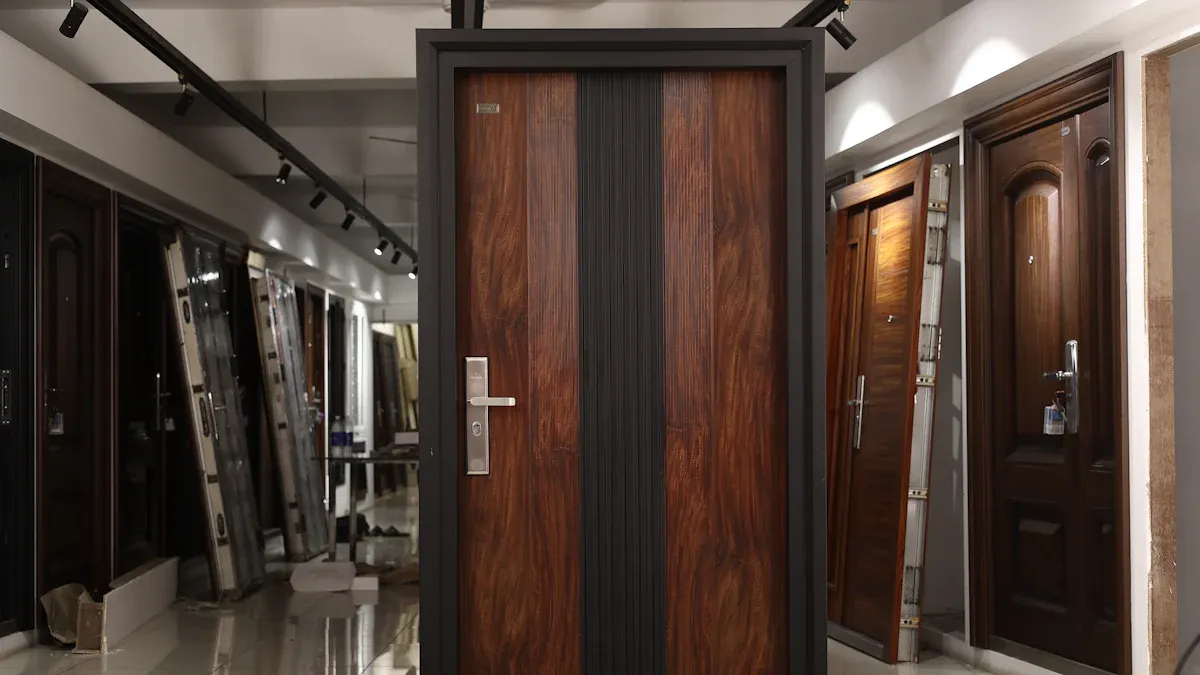
Steel doors give you top-level security for your home. You get a door that stands strong against forced entry, fire, and even blasts. Steel doors come in four security levels, from Standard to Maximum Duty. Many schools, hospitals, and government buildings use steel doors because they protect people and property so well. You can count on steel to last for decades, often outlasting wood by ten years or more. These doors resist wind, storms, and heavy use. They also help block out noise and keep your home comfortable.
Steel doors cost less than fiberglass or wood doors. Most steel doors range from $200 to $1,000, with installation costs between $600 and $1,800. This makes steel a budget-friendly choice for many families. You can also find steel doors with different finishes and colors, so you do not have to give up style for safety.
Tip: Steel doors are a smart pick if you want strong protection and good value for your money.
| Security Aspect | Steel Doors | Wood Doors | Fiberglass Doors |
| Forced Entry Resistance | Passes top standards (ASTM, SD-STD) | Not suited; cracks easily | Less secure than steel |
| Blast Resistance | Yes | No | Not specified |
| Fire Rating | Up to 3 hours | Up to 90 minutes | Not comparable |
| Security Levels | 1-4 (Standard to Max Duty) | N/A | N/A |
| Durability | 30+ years | Can warp or crack | Good, but less secure |
Cons
You should know about some downsides before you choose steel. Steel doors can dent or scratch if hit hard. If the paint or coating chips, the door may rust over time. Many people say steel doors do not look as nice as wood or fiberglass. You have fewer choices for custom designs, and it is hard to trim or change the size of a steel door. Steel can get hot in the sun, which may cause paint to peel. Because steel doors are heavy, you often need a professional to install them.
- Dents and scratches from daily use
- Rust if the coating gets damaged
- Fewer style and customization options
- Can get hot and peel paint in direct sun
- Heavy and hard to install or modify
Best For
Steel doors work best if you want the highest level of security and durability. You should pick steel if you live in a place with storms, high winds, or a risk of break-ins. Steel doors fit well on garages, basements, and main entries. They are also a top choice for schools, hospitals, and commercial buildings. If you want a door that lasts, protects, and saves money, steel is a strong option for your home.
Wood Doors
Pros
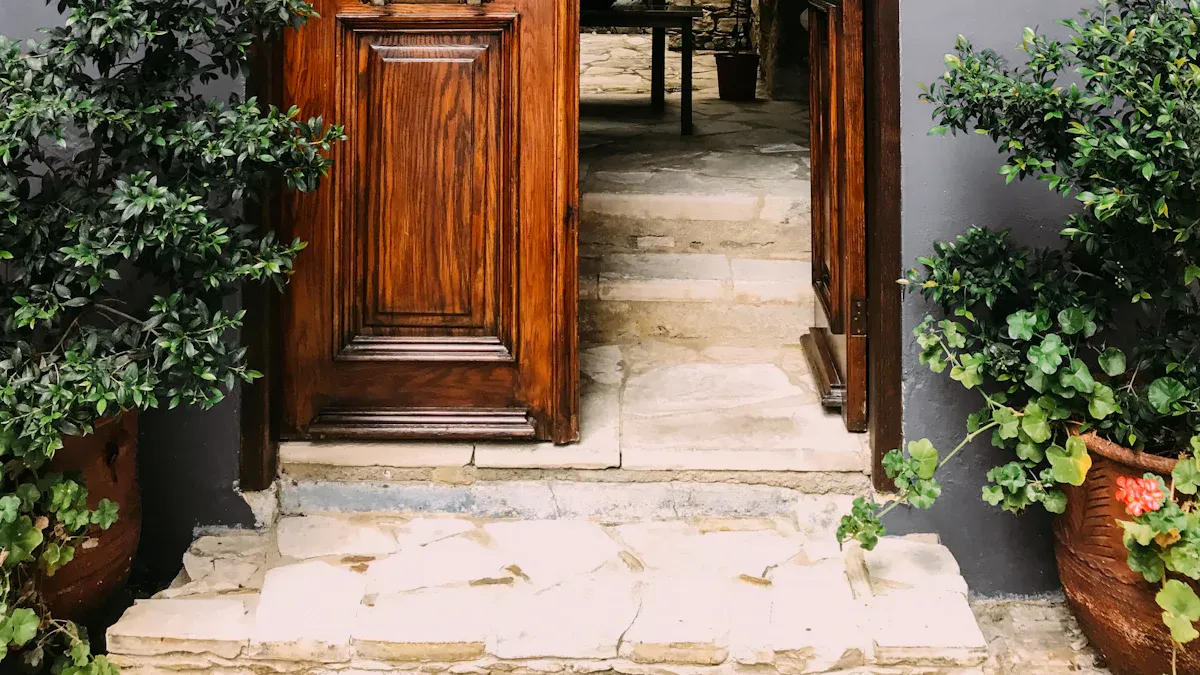
Wood doors give your home a warm, classic look that stands out. You can choose from many wood types, stains, and designs to match your house. Many high-end homes use wood doors because of their rich appearance and solid feel. In North America, about 35-40% of luxury homes feature wood exterior doors, showing their popularity among homeowners who want elegance and tradition. Wood doors work well for custom shapes, glass inserts, and detailed carvings. You can refinish or repaint them to keep them looking fresh. Many architectural styles, such as Craftsman, Ranch, and Mediterranean, look best with wood doors. You can also find wood doors that fit modern homes with clean lines and simple hardware.
Note: Wood doors offer a unique, natural beauty that other materials cannot match.
| Region | % of High-End Homes Using Wood Doors |
| North America | 35-40% |
| Europe | 30-40% |
Cons
You need to care for wood doors more than steel or fiberglass. Wood can swell, shrink, or warp when the weather changes. This movement can cause gaps or sticking, which lowers energy efficiency. Wood doors usually have an insulation value of about R-3, which is less than fiberglass or insulated steel. Sunlight and rain can damage the finish, so you must reseal or repaint the door every few years. Doors facing south or west need extra protection from the sun. Moisture can cause rot or mold if you do not seal the edges and glass areas well.
Common maintenance tasks include:
- Sealing all edges to block moisture.
- Adding a porch or awning for protection.
- Checking for cracks, peeling, or damage.
- Cleaning with mild soap and water.
- Resealing or adding a topcoat every few years.
- Lubricating hardware and replacing worn weatherstripping.
| Door Type | Insulation Value (R-Value) | Energy Efficiency Notes |
| Wood Doors | ~R-3 | Lower insulation; can expand/contract, causing gaps or sticking |
| Fiberglass Doors | R-5 to R-6 | Superior insulation; resists warping; keeps temperatures steady |
| Steel Doors | Varies (insulated cores) | High efficiency with insulated cores and weatherstripping; good for harsh climates |
Best For
You should pick a wood door if you want a high-end look and a door that fits your home’s style. Wood works best for Craftsman, Ranch, Mediterranean, and modern homes. If you live in a mild climate or can provide good protection from sun and rain, wood is a great choice. You may need to spend more time on upkeep, but you get a door that adds beauty and value to your home. If you want a door that stands out and can be customized, wood is the top pick for you.
Best Type for Your Needs
Quick Comparison
Choosing the best type of exterior door means looking at how each material performs in key areas. You want a door that fits your home, your climate, and your budget. The table below gives you a clear side-by-side look at wood, steel, and fiberglass doors.
| Feature | Wood Doors | Steel Doors | Fiberglass Doors |
| Security | Moderate; can warp or rot, less secure | Highest; strong frame, resists forced entry, but dents and rust possible | Good; strong, but not as tough as steel |
| Durability | Low; warps, rots, needs high maintenance | Very high; resists warping, swelling, rotting; needs rust prevention | High; resists warping, cracking, rust; lasts long |
| Maintenance | High; frequent painting and sealing | Moderate; repaint every 5-7 years, fix dents and scratches | Low; occasional cleaning, repaint every 5-10 years |
| Insulation | Poor; less energy efficient | Good; insulated cores, seals well | Best; superior insulation, keeps heat and cold out |
| Cost | High upfront and maintenance costs | Lower upfront, best return on investment | Mid-range; higher upfront, lower long-term cost |
| Appearance | Classic, natural wood look | Can mimic wood, but fewer design options | Many styles, realistic wood grain, more options |
| Longevity | Shorter lifespan, prone to damage | Long lifespan with care | Long lifespan, especially with quality models |
You can see that each door material has strengths and weaknesses. Steel doors give you the most security and a long life if you keep up with maintenance. Fiberglass doors offer the best insulation and need the least care. Wood doors look beautiful and classic, but you must work harder to keep them in good shape.
Factors to Consider
When you pick the best type of exterior door, you need to think about what matters most to you and your home. Home improvement experts suggest you look at these important points:
- Material Selection: Wood gives you beauty and a classic look, but you must paint or seal it often. Steel is strong and secure, but you need to watch for dents and rust. Fiberglass is strong, low-maintenance, and works well in many climates.
- Performance: Your door should keep your home safe and block out wind, rain, and noise. Make sure it opens and closes smoothly.
- Security Features: Choose a door with a strong frame and a high-quality lock. Look for locks with a BHMA grade for extra safety.
- Maintenance: Check the weatherstripping and clean your door regularly. This helps your door last longer and work better.
- Lighting and Ventilation: Glass inserts and sidelights let in more light. Screen doors can help with airflow.
- Curb Appeal: The color and style of your door make a big difference in how your home looks from the street.
- Smart Locks: Modern locks add both security and convenience.
- Climate Suitability: Pick a material that fits your local weather. Wood can warp in wet places. Steel can rust in salty air. Fiberglass handles most climates well.
- Budget: Think about both the upfront cost and the long-term cost. Wood doors cost more to buy and keep up. Steel doors cost less at first, but you may need to repaint them. Fiberglass costs more at first, but you save on maintenance and energy bills.
Tip: If you want the best type for energy savings and low upkeep, fiberglass is a smart choice. If you care most about security and value, steel may be the best type for you. If you love a classic look and do not mind extra work, wood could be your best type.
You should also think about where you will put the door. Main entry doors need more security and style. Side or back doors may need more weather resistance. Always match the door to your needs and your home’s style.
You can use this guide to help you decide which door is the best type for your home. Take your time, compare your options, and choose the door that fits your life.
Specialty Doors
Specialty doors give you more choices for your home. You might want extra safety, better energy savings, or a special style. Some specialty doors are storm doors, patio doors, and security doors. Each one helps with a different need and can fix certain problems in your house.
Storm Doors
Storm doors add another layer to your main door. They help protect your home from bad weather and make it safer. Building codes say storm doors are good for places with strong winds or storms. You get many good things when you put in a storm door:
- More safety because they block wind, flying things, and pressure changes.
- Protection during hurricanes and tornadoes with strong materials and frames.
- Better energy savings from insulated glass and tight seals, which can lower your bills.
- Less noise because of special glass and sealed frames, so your house is quieter.
- Meeting insurance and building rules, which can help lower your insurance costs.
Tip: Storm doors are best if you live where weather is rough or if you want to save more energy.
Patio Doors
Patio doors link your inside space to the outside. They are often sliding or French doors with big glass panels. These doors let in lots of sunlight and make it easy to go outside. Patio doors use double or triple glass with special coatings to keep in heat or cool air. Still, glass does not keep heat in as well as fiberglass or steel. You may feel more heat or cold through patio doors, even with new glass. For safety, patio doors need strong locks, tough glass, and strong frames. Good installation and weatherstripping help keep your home safe and save energy.
Security Doors
Security doors keep your home safe from break-ins and other dangers. You see these doors in places that need extra safety, like government buildings or homes in risky areas. Security doors use steel frames, thick grilles, and strong locks. Many have 5-pin cylinder key locks, heavy hinges, and materials that do not rust. Some security doors have emergency exits like panic bars. When you pick a security door, choose one that matches your home’s look and meets safety rules. You also want a door that fits well and uses good hardware for the best safety.
Note: Always pick the specialty door that fits your home’s needs, weather, and style for the best results.
You want the best exterior door for your home. Steel doors are very safe and last a long time. Home security experts say steel doors protect you best. Fiberglass doors are good in tough weather and help save energy. Wood doors look nice and classic but need more care. Think about your weather, how much you want to spend, and your style. Go to a showroom to look at doors and touch them. This will help you pick the best door for your home and feel sure about your choice.
FAQ
What is the most energy-efficient exterior door?
Fiberglass doors give you the best energy savings. These doors have high insulation values and keep your home comfortable in any season. You can lower your energy bills with a quality fiberglass door.
How often should you maintain your exterior door?
Check your door every year. Clean it with mild soap and water. For wood doors, reseal or repaint every few years. For steel and fiberglass, inspect weatherstripping and touch up paint as needed.
Can you paint or stain any exterior door?
You can paint or stain most wood and fiberglass doors. Steel doors accept paint but not stain. Always use paint or stain made for exterior use. Follow the manufacturer’s instructions for the best results.
Which door material is best for harsh weather?
Tip: Fiberglass doors handle harsh weather best. These doors resist warping, cracking, and rust. Steel doors also work well in storms but may rust if scratched. Wood doors need extra care in wet or humid climates.


