

Soundproofing your bedroom door can make your nights much quieter and improve your sleep. You do not need to break the bank or have special skills. Many people use affordable materials like Sola Felt, which absorbs sound and reduces noise. Want more options? Check out this quick list:
| Material | Average Cost | Use in Bedrooms |
| Sola Felt | $2-$5/sq ft | Absorbs sound on doors/walls |
| Acoustic door panel | $10-$100 | Blocks noise, easy to install |
You can start small and still notice a big difference.
Key Takeaways
- Fill all gaps and cracks around your bedroom door. Use weatherstripping, acoustic caulk, or expanding foam to block noise well.
- Put an acoustic door sweep or automatic drop seal at the bottom of your door. This will stop sound from coming in under the door.
- Make your door heavier with mass-loaded vinyl, acoustic panels, or soundproof blankets. This helps lower noise and vibrations.
- Think about getting a solid core door if you want less noise. It gives better sound insulation and makes a bigger difference.
- Place rugs and heavy curtains in your bedroom. They soak up sound and help make your room quieter and more peaceful.
Why Doors Let in Noise
Common Weak Points
You might think your bedroom door keeps out noise, but most doors have weak spots that let sound sneak in. Here are the main trouble areas:
- Gaps around the edges of the door let in a surprising amount of noise. Even tiny cracks can make a big difference.
- Most bedroom doors are light and hollow. They block much less sound than your walls. In fact, a typical door only stops about 15 decibels, while your walls can block up to 45 decibels.
- The door itself can vibrate when sound hits it. This makes the noise even louder inside your room.
- If your door frame is not sealed tightly, sound can travel through the cracks and even through the frame itself.
- Hinges and latches can also be weak points. If they are loose or not sealed, they let sound pass through.
- Sometimes, sound travels through the solid parts of the door and frame. If the frame touches the wall directly, noise can move right through.
- Air gaps and cavities inside the door or frame act like little tunnels for sound.
Tip: Adding mass to your door, like extra layers of wood or special panels, helps block more noise. Sealing every gap with weatherstripping or foam makes a huge difference.
Sleep Impact
Noise that slips through your bedroom door can mess with your sleep. You might hear voices from the hallway, footsteps, or even the TV from another room. These sounds can wake you up or keep you from falling asleep in the first place.
When you do not get enough quiet, your body cannot rest properly. You may feel tired, cranky, or have trouble focusing the next day. Over time, poor sleep can affect your health and mood. That is why fixing the weak points in your bedroom door is so important. A quieter room means better sleep and a happier you!
Seal Gaps

Sealing every gap and crack around your bedroom door is one of the best ways to block out unwanted noise. Even small openings let sound travel right into your room. When you close up these spaces, you stop noise from slipping through. Many experts say that adding door sweeps and new door gaskets can make a big difference. This simple upgrade keeps conversations and hallway sounds from leaking in, giving you more privacy and peace.
How do you find these sneaky gaps? Try this: turn off the lights in your room at night, then shine a flashlight from the hallway side of the door. If you see light peeking through, sound can get in there too. You can also use a stick of incense or a smoke pen. Watch where the smoke moves near the door. If it gets pulled through a crack, you have found a leak.
Weatherstripping
Weatherstripping is an easy fix for most gaps around your door frame. You can buy foam or rubber strips at any hardware store. Just peel off the backing and press the strip along the sides and top of your door frame. This creates a tight seal when you close the door. Weatherstripping works well for both wooden and acoustic door setups. It also helps keep out drafts, so your room stays cozy.
Acoustic Caulk
Acoustic caulk is a special type of sealant that stays soft and flexible. Regular caulk can dry out and crack, but acoustic caulk keeps its seal for years. This means sound cannot sneak through tiny cracks around your door. Many builders use acoustic caulk in new homes because it works so well. Just run a bead of caulk along any gaps where the door frame meets the wall or floor. Wipe away the extra with a damp cloth. Even a small amount can make your room much quieter.
Expanding Foam
For bigger gaps or holes, expanding foam is your friend. This foam grows to fill spaces and then hardens. Spray it into the gap, let it expand, and trim off any extra once it dries. Be careful not to use too much, or it might push against your door frame. Expanding foam is great for spots you cannot reach with weatherstripping or caulk.
Tip: Always check for new gaps after you finish. Sometimes, sealing one spot can reveal another!
Acoustic Door Sweeps & Bottom Seals
Noise often sneaks in right under your bedroom door. Even if you seal the sides and top, the gap at the bottom can let in a lot of sound. Acoustic door sweeps and bottom seals help you block this weak spot. These tools attach to the bottom of your door and create a barrier that stops noise, dust, and even drafts.
Many people have tested these products at home. One person used a decibel meter and found that a simple foam strip around the door cut noise by about 5 decibels. That means you can play music 5 decibels louder inside your room without bothering anyone outside. Experts agree that while the door’s weight matters most, a good seal at the bottom is critical for real soundproofing. Companies like Acoustic Sciences Corporation and Noberne Seals make kits that work well in homes.
Door Sweep Installation
You can install an acoustic door sweep in just a few minutes. Most sweeps come with screws or strong adhesive. First, measure the width of your door. Cut the sweep to fit if needed. Line it up with the bottom edge of your door, then attach it so it brushes the floor or threshold. Make sure it covers the entire gap. You want a snug fit, but the door should still open and close easily.
Here are some popular types:
- Basic rubber or silicone sweeps
- Metal-backed sweeps with thick bristles
- Self-adhesive sweeps for quick fixes
Tip: If you rent, look for sweeps that use adhesive instead of screws. You can remove them later without damage.
Automatic Drop Seals
Automatic drop seals offer a smart upgrade for your acoustic door. These seals lift up when you open the door and drop down to seal the gap when you close it. You get a tight seal every time, but your floor stays scratch-free. Many people like these for bedrooms with carpet or uneven floors.
To install, follow the instructions that come with the product. Usually, you screw the seal into the bottom edge of the door. When you close the door, a small button on the side pushes in and the seal drops down. Brands like Noberne and Raven make reliable options.
If you want a quieter bedroom, adding an acoustic door sweep or drop seal is a simple step that really works.
Add Mass & Panels
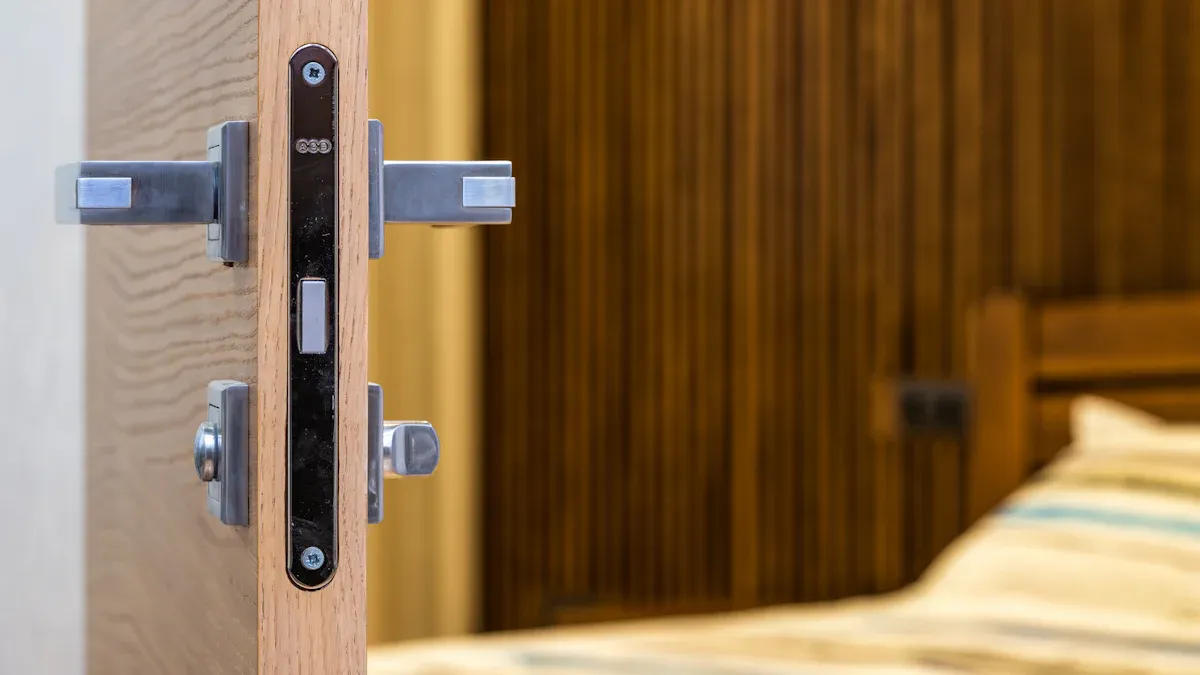
If you want to block more noise, you need to make your door heavier. Sound has a harder time getting through thick, dense doors. You can add mass in a few simple ways. These tricks work well for both permanent and temporary fixes. Even if you rent, you can try some of these ideas without making big changes.
Mass-Loaded Vinyl
Mass-loaded vinyl (MLV) is a special, heavy material that you can attach to your door. It looks like a thick, flexible sheet. MLV blocks sound by absorbing and reflecting sound waves. You can cut it to fit your door and stick it on with strong tape or glue. Many people use MLV because it works for both solid and hollow doors. It boosts the soundproofing power of your acoustic door without making it look bulky.
MLV stands out because:
- It is dense and flexible, so it fits most doors.
- It raises the sound transmission class (STC) rating of your door.
- It passes fire safety and acoustic tests, so it is safe for bedrooms.
You can sandwich MLV between panels or just attach it to the back of your door. This simple step can make your room much quieter.
Acoustic Door Panels
Acoustic door panels are another great way to add mass. These panels come in different styles and sizes. Some look like thick foam, while others use wood or composite materials. You can stick them right onto your door. They help block sound and also stop the door from vibrating.
If you have a hollow core door, you can fill the inside with foam or insulation before adding panels. This makes your acoustic door even better at blocking noise. Many panels are renter-friendly and easy to remove later.
Soundproof Blankets
Soundproof blankets give you a quick, temporary fix. You can hang them over your door when you need extra quiet. Some blankets, like the Insul-Quilt™ Sound Absorbing Blanket, have a Noise Reduction Coefficient (NRC) of 1.00 and an STC rating of 16. That means they soak up a lot of sound and help keep your room peaceful.
| Product Name | NRC Value | STC Rating | Use Case |
| Insul-Quilt™ Blanket | 1.00 | 16 | Temporary door coverage |
These blankets work best when you cover the whole door and seal the edges. You can take them down anytime, so they are perfect if you do not want to make permanent changes.
Tip: Try layering a soundproof blanket with an acoustic door panel for even better results!
Upgrade & Extra Absorption
Solid Core Door
If you want a big upgrade for your bedroom, think about swapping your old door for a solid core door. This type of door feels heavier because it has a dense wood core. That extra weight helps block more noise than a hollow core door. You get a sturdier feel and better sound control. Many people notice that a solid core door makes their room much quieter, especially when paired with an acoustic door sweep.
Here’s a quick look at how different doors compare:
| Door Type | Sound Insulation | Durability | Cost/Affordability | Notes |
| Solid Core Door | Good for sound control | Resists warping, heavy | Mid-range | Great for bedrooms, heavier feel |
| Solid Wood Door | Best natural sound insulation | Very durable, needs maintenance | More expensive | Beautiful look, can warp in humidity |
| Hollow Core Door | Least sound insulation | Lightweight, less durable | Most affordable | Common in budget homes |
Solid core doors cost more than hollow ones, but you get better sleep and more privacy. You can also find acoustic door options made from wood or steel if you want even more soundproofing.
Tip: If you rent, ask your landlord before changing the door. Sometimes, you can add mass-loaded vinyl or panels instead.
Rugs and Curtains
You can make your bedroom even quieter by adding soft materials. Rugs and heavy curtains help soak up sound. When you put a thick rug on the floor, it stops noise from bouncing around. Heavy curtains block sounds from windows and walls. Many experts say these materials help reduce noise and make your room feel calm.
Studies show that using rugs and curtains in bedrooms lowers noise and helps you sleep better. Quieter rooms help your body rest and boost your sleep cycles. You might even notice you fall asleep faster and wake up less during the night.
Try these ideas:
- Place a large area rug near your door or bed.
- Hang blackout or soundproof curtains over your windows.
- Layer rugs for extra softness and sound absorption.
Note: You do not need to spend a lot. Even a simple rug or thick curtain can make a big difference in your sleep quality.
You can make your bedroom quieter with a few simple steps. Try sealing gaps, adding an acoustic door sweep, and using panels or blankets to add mass. If you want a bigger change, upgrade to a solid core door. Studies show that these changes can lower noise by up to 16 dBA, which helps people sleep better.
| Intervention Type | Noise Reduction (dBA) | Sleep Quality Impact |
| Architectural Changes | Up to 16 | Improved sleep in studies |
| Multicomponent Steps | 3 or more | Noticeable improvement |
Start small and build up. Every step brings you closer to peaceful, restful nights. Give these ideas a try and enjoy a quieter bedroom! 💤
FAQ
How can I tell if my door needs soundproofing?
Shine a flashlight around the edges of your closed door. If you see light, sound can get through. You might also hear voices or footsteps from outside. These signs mean your door could use some soundproofing.
Can I soundproof my door if I rent?
Yes! You can use weatherstripping, door sweeps with adhesive, or hang soundproof blankets. These options do not damage the door. You can remove them when you move out. Always check your lease for rules.
Will soundproofing my door make my room completely silent?
Soundproofing reduces noise, but it may not block every sound. You will notice a big difference with less noise from the hallway or other rooms. For total silence, you might need to soundproof walls and windows too.
What is the cheapest way to soundproof a bedroom door?
Try weatherstripping or a draft stopper. These cost just a few dollars and block gaps around your door. You can also hang a thick blanket for extra help. Start with these before buying more expensive products.


