
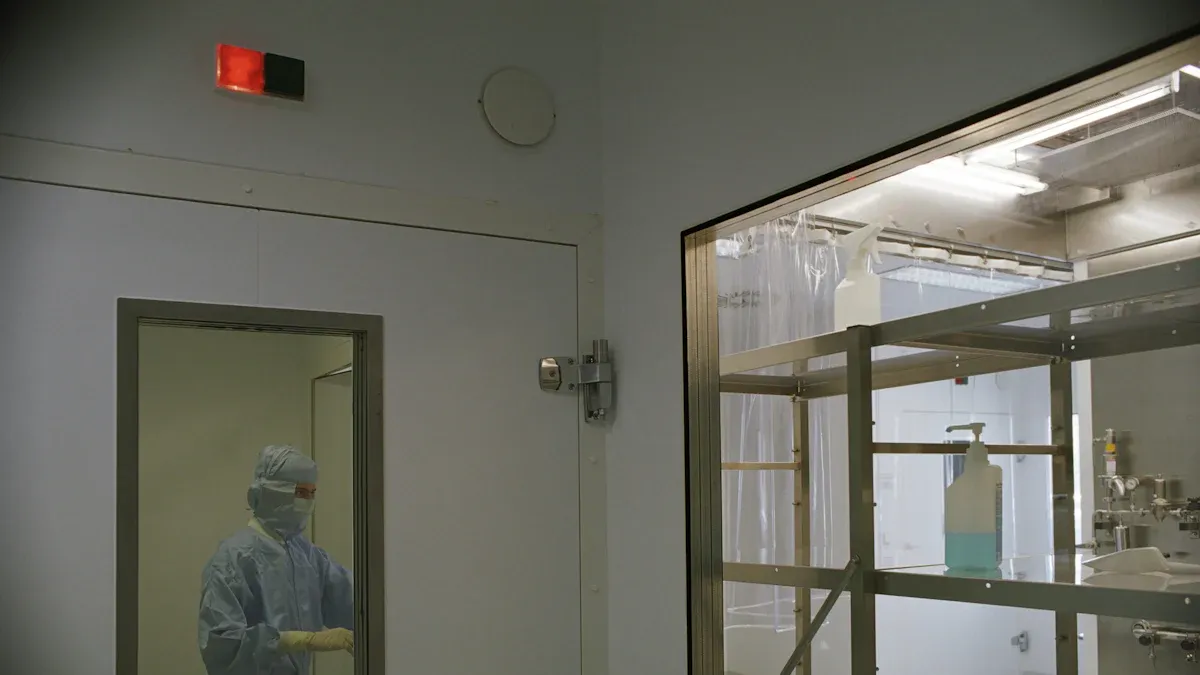
When hospitals choose doors, they have to make significant decisions. Safety is crucial to keep patients and staff safe. Cleanliness is also very important. Door handles in hospitals have more germs than in public places, with a contamination rate of 10.82%. Even a small amount of bacteria on handles can lead to more infections. Durability, accessibility, and adherence to regulations facilitate daily operations. These factors also contribute to everyone’s safety. When hospitals choose the right doors, it makes work easier and provides better protection for patients.
Key Takeaways
- Safety comes first when picking hospital doors. Doors should close by themselves and have strong locks. These features help keep patients and staff safe.
- Cleanliness is very important. Pick doors that are smooth and do not soak up liquids. Doors with antibacterial coatings help stop germs from spreading.
- Doors must be easy for everyone to use. They should follow ADA rules. This helps people with disabilities get in and out easily.
- Doors need to be tough. Choose doors made from strong materials. They should last a long time and not break easily. This saves money on repairs.
- Hospitals must follow rules for doors. These include fire safety, ADA, and local building codes. Following these rules keeps everyone safe and the hospital working well.
How hospitals choose doors

Every door in a hospital is important. Hospitals pick doors using strict rules. These rules help keep people safe, healthy, and comfortable. Each door must work well in busy halls, patient rooms, and special care areas. The right door helps meet safety rules. It also helps stop infections. It makes sure everyone can move easily.
Key Criteria
Hospitals look at many things when picking doors. These things are durability, how the door works, airflow, material quality, and hygiene. The table below lists the most common things hospitals check:
| Criteria | Description |
|---|---|
| Functionality | Doors should make it easy for people to get in and out, especially where lots of people walk. |
| Safety | Doors need things like self-closing parts and locks that let people escape from inside. |
| Accessibility | Handles and other parts should be easy for everyone to use, even people with disabilities. |
| Compliance with Regulations | Doors must follow fire safety and building rules when made and put in. |
Hospitals also think about touchless or automatic doors. These doors help stop germs from spreading. They also help staff move fast when their hands are full. Doors need to be wide enough for beds, wheelchairs, and equipment. Doors for busy areas must handle lots of people all day.
Safety & Security
Safety and security are the most important things for hospital doors. Doors must protect patients, staff, and visitors. Security features like electronic locks, access control, and alarms stop people who should not enter. The table below shows some important security features:
| Security Feature | Description |
|---|---|
| Electronic Locks | These locks use codes, cards, or fingerprints so only certain people can get in. |
| Access Control Systems | These systems keep track of who goes in and out and help control entry to certain places. |
| Alarm Systems | Alarms warn people right away if someone tries to get in without permission. |
| Specialized Locking Mechanisms | These locks, like mortise locks and magnetic locks, make it harder for someone to break in. |
| Automatic Closing Devices | These are needed in places like medicine rooms to make sure doors close tightly. |
Strong materials like steel or aluminum give extra protection. Good locks and following safety rules help keep everyone safe. Hospitals pick doors that are strong but still make people feel welcome.
Hospital door locks help control who can go into special areas. This is important to stop people who should not enter. New locks and control systems help managers keep places safe but friendly.
Hygiene & Infection Control
Keeping things clean is very important in hospitals. Doors should help stop germs from spreading. Hospitals use materials and finishes that fight bacteria, like anti-bacterial coatings, silver ion coatings, copper coatings, special polymers, high-pressure laminate, and stainless steel.
Touchless or automatic doors help control infections. These doors mean people do not have to touch handles. This is very important in places like operating rooms and isolation wards. Automatic doors with sensors lower the chance of spreading germs. Bacteria can grow on cleaned handles in just 15 minutes, so less touching is better.
- Touchless or automatic doors help stop people from touching the same spots, which lowers the chance of spreading germs.
- Many patients get infections in hospitals, so stopping germs is very important.
- Touchless doors help doctors and nurses keep things clean in operating rooms, so they do not break hygiene rules.
Accessibility & Efficiency
Accessibility means everyone can use the doors, even people with disabilities. Hospitals pick doors that follow ADA rules. The table below shows some important things doors must have:
| Requirement | Description |
|---|---|
| Clear Width | Doors must have at least 32 inches of open space when open. |
| Maneuvering Clearances | There must be enough room for people with wheelchairs or walkers to get through. |
| Door Hardware | Handles must be easy to use with one hand and not need a tight grip. |
| Maximum Opening Force | Doors should not need more than 5 pounds of force to open, except for fire or outside doors. |
| Threshold Height | The bottom edge of the door should not be higher than half an inch for most inside doors. |
Automatic doors help people get in and out quickly in busy hospital areas. They make it easier to reach important places, stop crowding, and help staff act fast in emergencies. Touchless doors also help stop germs.
Durability & Maintenance
Hospital doors get used a lot every day. Hospitals pick doors that last long and are easy to clean. PVC doors are very tough, do not break easily, and need little care. High-pressure laminate doors also last long and do not break easily, so they are good for busy places.
If doors break or chip easily, hospitals spend more money fixing them. Strong doors save money and help keep hospitals safe and clean.
FRP doors are made with fiberglass-reinforced polymer. These doors are very strong, do not get damaged by water, and do not rust. This makes them great for busy places.
Compliance & Standards
Hospitals must follow rules when picking doors. They need to meet fire safety rules, ADA rules, and local building codes. The table below lists some important rules:
| Standard Type | Description |
|---|---|
| NFPA Standards | Fire doors must meet NFPA fire safety rules. |
| ADA Compliance | Hospital doors must follow ADA rules so people with disabilities can use them. |
| Local Codes | Hospitals must follow local building and safety rules to be ready for emergencies. |
Fire doors must be checked and tested every year. Doors need self-closing parts and locks that latch tightly. The space between double doors should not be more than one-eighth of an inch. Hospitals must keep records of fire doors and show proof of yearly tests during checks.
When hospitals pick doors, they make sure every choice helps with safety, cleanliness, strength, accessibility, and following rules. This makes hospitals safer and helps everyone do their jobs better.
Door types & uses
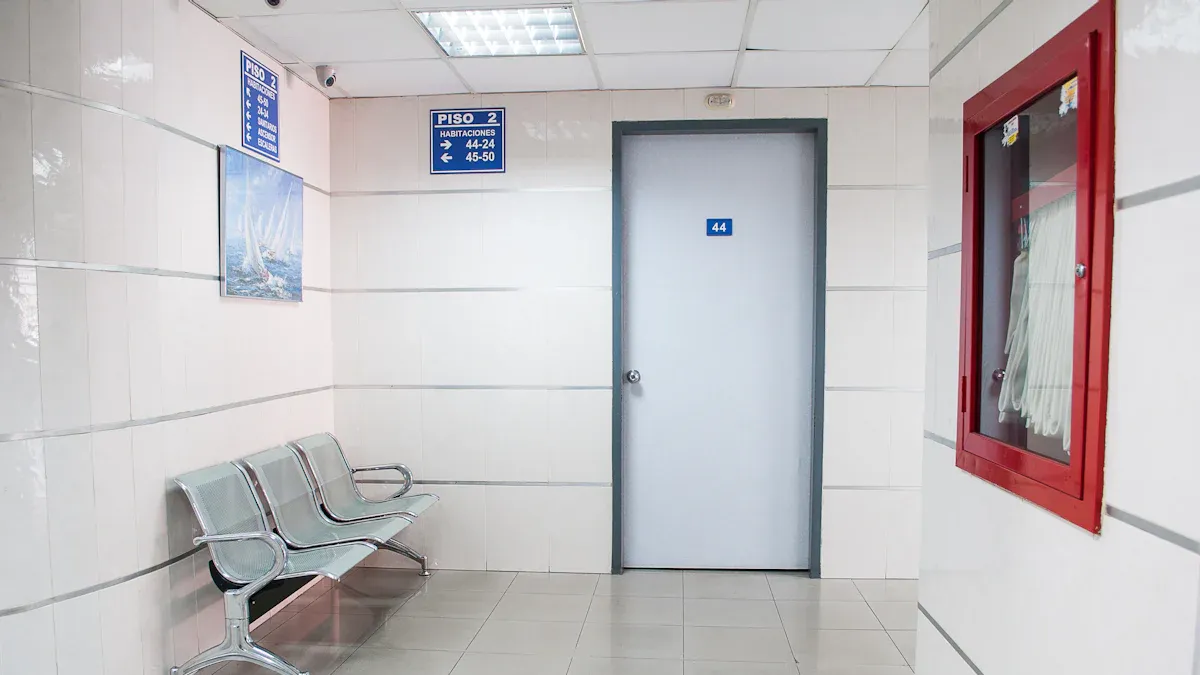
Patient Room Doors
Patient room doors must keep patients safe and private. They also help stop germs from spreading. Half-glass swing doors let staff see inside. Patients still feel comfortable and private. These doors are easy to open for people who need help. The smooth surface is simple to clean. Cleaning helps keep germs away.
| Feature | Half-Glass Swing Door |
|---|---|
| Privacy | Staff can see inside but patients stay private. |
| Accessibility | Easy for people who have trouble moving. |
| Infection Control | Antimicrobial and easy to clean, so fewer infections. |
| Safety | Staff can check quickly in emergencies. |
| Hygiene | Smooth surface is simple to disinfect and keeps germs away. |
Sliding doors help staff move faster. They make it easier to open doors. These doors help keep patient care safe and quick.
Operating Room Doors
Operating rooms need doors that keep germs out. Hermetically sealed sliding doors close tightly. This stops dust and germs from getting in. These doors control airflow and keep things quiet. You can open them without touching the handle. This lowers the chance of spreading germs. Hospitals use these doors to meet safety rules and stop infections.
Tip: Hermetically sealed sliding doors can lower infections after surgery by 30%.
Emergency Area Doors
Emergency rooms need doors that open fast. Automatic doors open when someone walks up. Folding and breakaway doors make big openings for stretchers. Fire doors help keep fires from spreading. Key card doors and anti-piggybacking doors keep areas safe. Automatic sliding doors help people move quickly in busy places.
- Automatic doors open fast for quick entry.
- Folding doors make big openings for equipment.
- Breakaway doors help people leave quickly.
Staff-Only Doors
Staff-only doors keep labs and offices safe. Key cards or biometrics let only staff enter. Lockdown features add more safety in emergencies. Signs help staff work without being bothered. Always mark these doors with “Authorized Personnel Only” to avoid confusion.
- Access control keeps special areas safe.
- Signs help staff work and keep patients safe.
Specialized Doors (e.g., sliding, large opening)
Special doors help hospitals move beds and wheelchairs easily. Automatic sliding doors make wide paths for everyone. Sliding doors save space and let people go in and out at once. Large opening doors help people leave quickly in emergencies. Automatic sliding doors also help stop germs by keeping air controlled.
| Advantage | Description |
|---|---|
| Accessibility | Automatic sliding doors make wide paths for people and wheelchairs. |
| Space Efficiency | Sliding doors use less space and let many people enter and exit. |
| Emergency Evacuation | In emergencies, these doors open wide for safe exits. |
| Public Health Considerations | Automatic doors help stop germs by keeping the air clean. |
These doors follow ADA rules and help keep everyone safe every day and in emergencies.
Decision process
Stakeholder Roles
You need to involve several people when you select doors for a hospital. Each person has a special job.
- Architects look at local codes and healthcare rules. They make sure doors fit the design and meet safety needs.
- Facility managers check if doors help the hospital work well. They think about cost and how doors affect patients and staff.
- Clinical staff want doors that make it easy to move and keep everyone safe. They focus on life safety and code rules.
These roles help you create spaces that are safe, easy to use, and meet all rules. When you work together, you make better choices for everyone.
Needs Assessment
You must know what your hospital needs before you pick doors. Start by looking at each area. Patient rooms need privacy and easy cleaning. Operating rooms need doors that stop germs and control air. Emergency areas need doors that open fast and wide. Staff-only spaces need strong locks and signs.
Ask questions like:
- How many people use this door each day?
- Does the door need to be automatic or touchless?
- Will beds and wheelchairs fit through?
You should also think about space, air quality, and HIPAA rules. Good planning helps you avoid problems later.
Vendor Selection
You should compare vendors before you buy doors. Look for companies that know hospital rules and codes. Ask about door materials, safety features, and warranties. Check if the vendor can customize doors for your needs.
Make a list:
- Does the vendor follow healthcare codes?
- Can they provide doors for different hospital areas?
- Do they offer support after installation?
Pick a vendor who helps you meet safety, hygiene, and cost goals.
Installation & Review
You must plan the installation step carefully. Work with your vendor and staff to set a schedule. Make sure installers follow all codes and safety rules. After installation, review each door. Test locks, automatic openers, and safety features.
Create a checklist:
- Does the door open and close smoothly?
- Are all safety features working?
- Is the door easy to clean?
- Does it meet all codes?
Regular reviews help you keep doors safe and working well. When hospitals choose doors with care, you protect patients and staff for years.
Common mistakes
Overlooking Hygiene
You cannot ignore hygiene when you choose hospital doors. Dirty or hard-to-clean doors can spread germs fast. Many hospitals forget to check if doors have smooth, non-porous surfaces. These surfaces make cleaning easier and stop bacteria from hiding in cracks. You should also look for doors with antibacterial coatings. These coatings help fight germs every day. Hermetic sealing is important in high-risk areas. It keeps air and germs from moving between rooms. If you skip these steps, you put patients and staff at risk.
| Key Considerations | Description |
|---|---|
| Hygiene performance | Doors should be cleanable, smooth, non-porous, and fluid resistant. |
| Inorganic construction | Use materials like GRP that resist moisture and cleaning chemicals. |
| Hermetic sealing | Needed for high-risk areas to stop cross-contamination. |
Tip: Choose doors that are easy to clean and designed to lower infection risk.
Ignoring Accessibility
Accessibility helps everyone move safely in the hospital. Some hospitals forget about people who use wheelchairs or walkers. If you pick doors that are too narrow or heavy, you make it hard for patients and staff to get through. Handles should be easy to use with one hand. Automatic doors help people who cannot push or pull heavy doors. You should always check if doors meet ADA rules. This keeps your hospital open to all.
- Make sure doors have enough clear width.
- Pick handles that do not need a tight grip.
- Use automatic doors in busy or important areas.
Wrong Door Types
You need to match the door type to the room’s purpose. Some hospitals use the same door everywhere. This does not work well. For example, operating rooms need hermetic sliding doors to keep germs out. Patient rooms need doors that give privacy and are easy to clean. Emergency areas need doors that open fast and wide. Staff-only areas need strong locks. If you use the wrong door, you lower safety and slow down care.
- Check what each area needs.
- Pick doors that fit those needs.
- Review your choices with your team.
Skipping Maintenance
You must keep hospital doors in good shape. Some hospitals forget to check doors often. Broken locks, stuck hinges, or chipped surfaces can cause big problems. Regular checks help you find issues early. Clean doors last longer and keep germs away. If you skip maintenance, you spend more money fixing problems later.
Note: Set a schedule to inspect and clean doors. This keeps your hospital safe and running smoothly.
When picking doors for your hospital, think about safety first. Hygiene is also very important. Durability matters because doors get used a lot. Compliance means following all the rules. These things help keep patients and staff safe every day. Use this checklist to help you choose:
- Hygiene
- Fire resistance
- Acoustic control
- Accessibility
You should talk to architects before you decide. Facility managers can give good advice too. Clinical staff know what works best for care. Experts help you pick the right doors for each place. Planning ahead helps your hospital stay safe and work well.
FAQ
How do you clean hospital doors to prevent infections?
Use strong disinfectants made for hospitals on all door parts. Pay extra attention to handles and push plates. Clean these spots many times each day.
Tip: Pick doors with smooth surfaces that are not porous. This makes cleaning easier.
What regulations must hospital doors meet?
You need to follow fire safety rules, ADA standards, and local building laws.
| Standard | Purpose |
|---|---|
| NFPA | Fire safety |
| ADA | Accessibility |
| Local | Building compliance |
Are automatic doors better for hospitals?
Automatic doors help stop germs from spreading. They also make it easier for everyone to get in and out. Moving beds and equipment is simpler.
- Less touching means fewer germs.
- Staff and patients can enter and leave faster.
How often should you check hospital doors for problems?
Check hospital doors once a month. Look for locks that do not work, hinges that are stuck, or surfaces that are chipped.
Note: Checking doors often helps you fix small problems before they get worse.


