
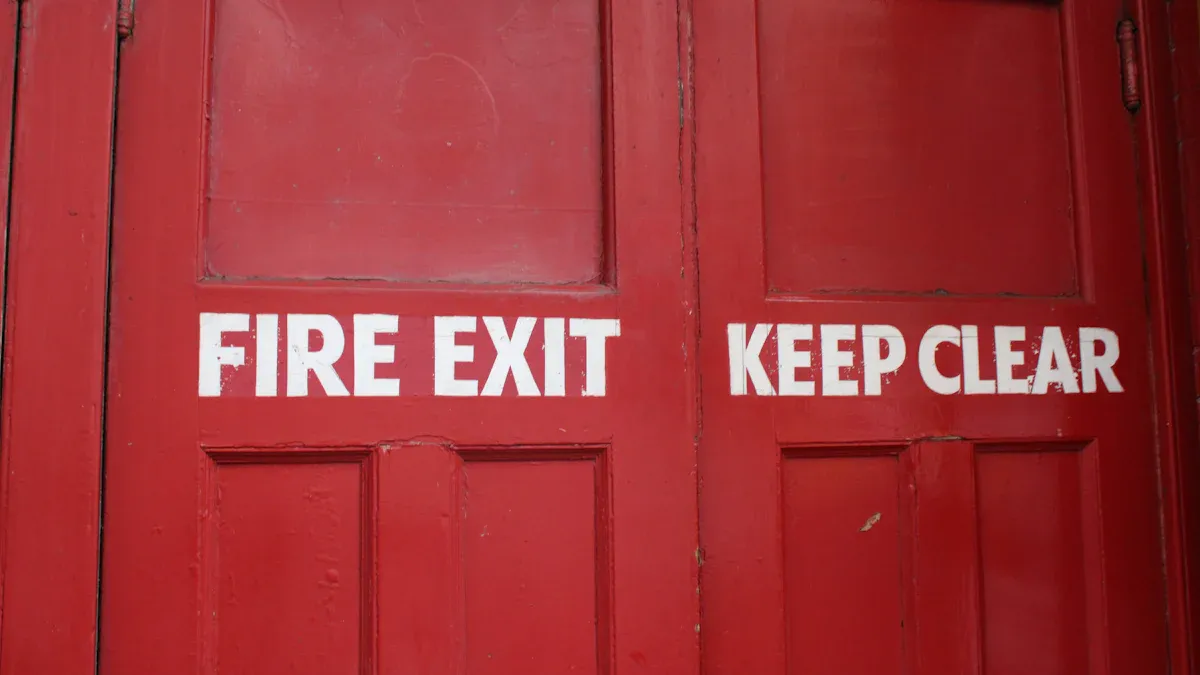
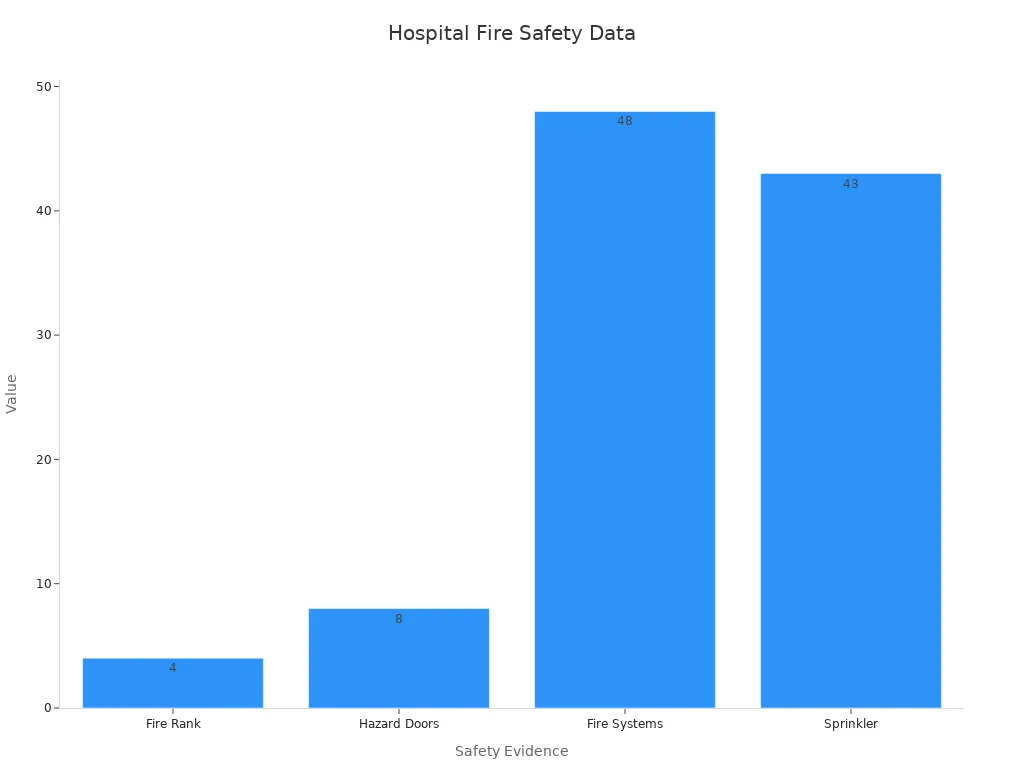
Hospital fire door systems are very important for saving lives in emergencies. Hospitals have special risks because many patients cannot move fast. Dangerous materials also make things more risky. It is important to check fire doors often. The Joint Commission said fire doors were the fourth most common safety problem.
| Evidence Aspect | Noncompliance Percentage / Trend |
| Fire protection systems | 48% |
| Sprinkler clearance | 43% |
| Corridor walls and doors |
43%
|
Fire doors that are taken care of well help keep people safe. They also protect equipment and hospital buildings.
Key Takeaways
- Fire doors in hospitals help save lives. They stop fire and smoke from spreading fast. This gives patients and staff more time to get out safely. Hospitals must follow strict rules for fire door ratings. They must also follow rules for installation and yearly checks. This helps make sure doors work well in emergencies. Regular checks and care stop common problems. These problems include gaps, broken parts, and blocked doors. These issues can make things less safe. Hospital staff have an important job. They check doors every day and report problems fast. They also follow training to keep fire doors working. Fire doors must stay closed and unblocked. This keeps patients, equipment, and hospital buildings safe during a fire.
Why Hospital Fire Doors Matter
Life and Property Protection
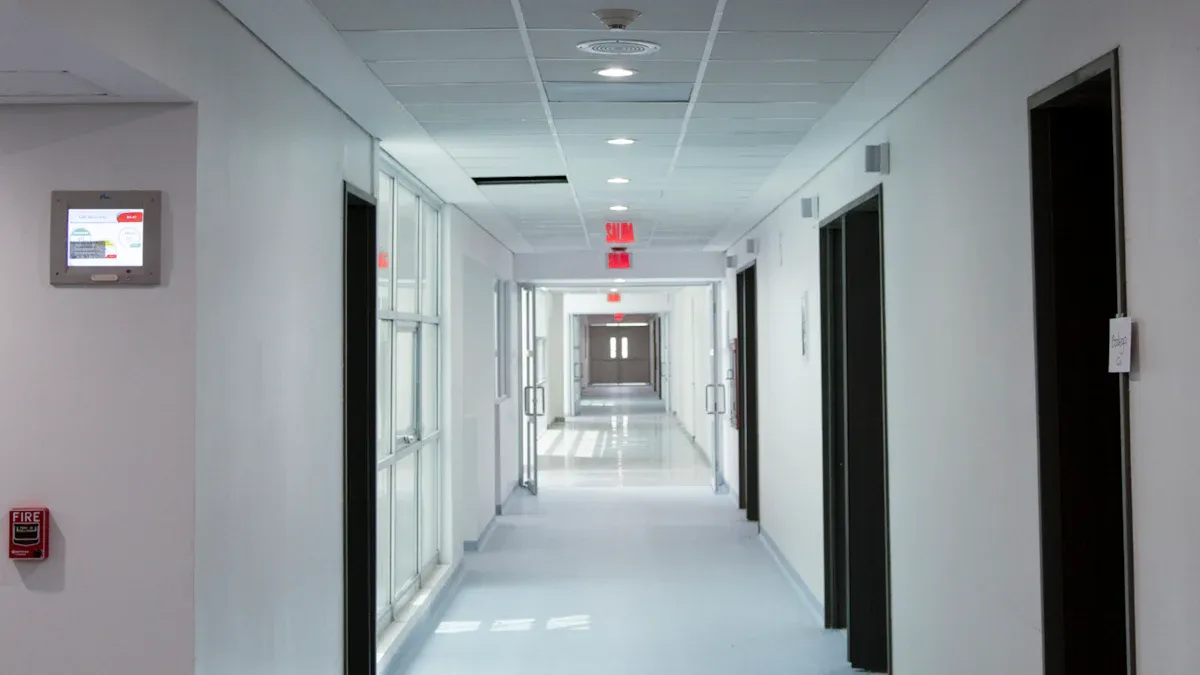
Hospital fire doors are very important for safety. They help protect people and things during a fire. These doors stop fire and smoke from moving fast through halls and rooms. If a fire starts, the door keeps flames and smoke in one spot. This gives everyone more time to get out safely. Many patients cannot move by themselves or need help to leave. Fire doors help keep these people safe by slowing the fire. They also protect costly equipment and important papers from harm. Hospitals depend on fire doors to keep everyone and everything as safe as possible.
Compartmentation and Escape Routes
Hospitals split buildings into sections that can stop fire for some time. Fire doors are a big part of this plan. They must stay shut and work well to do their job. In big hospitals, this helps staff move patients away from danger step by step. This is called phased evacuation. Fire doors keep fire and smoke in one section. This makes it easier for people to find safe ways out. Staff must check door labels, seals, hinges, and closers often. These checks make sure the doors will work in an emergency. Fire safety rules say fire doors cannot have holes or broken parts. Staff must look at and test them every year. If a fire door is blocked or missing a label, it may not work right. Hospitals must follow these rules to keep everyone safe, especially when leaving fast is hard.
Safeguarding Critical Areas
- Fire doors are strong barriers that keep fire and smoke out of important places like ICUs and operating rooms.
- These doors help keep air clean and escape paths open by stopping smoke.
- In places like operating rooms and emergency rooms, fire doors may have ratings like FD60 or FD90. This means they can stop fire for 60 to 90 minutes, giving more time to leave or wait for help.
- Some fire doors have tight seals and special windows. These help keep the area clean and let staff see inside while staying safe.
- Automatic closing systems link to fire alarms. When a fire starts, these doors shut tight to block fire and smoke.
- Hospitals use fire doors that meet strict safety rules. These rules make sure the doors work well in emergencies.
- By making safe zones, fire doors protect patients who cannot move fast. Staff can focus on care, knowing fire risks are under control.
Hospital Fire Door Standards
Fire Ratings and Materials
Hospital fire door assemblies must follow strict rules to keep people safe. Tests like ASTM E119 and UL 263 check if doors block fire and smoke for a set time. Most hospital fire doors have ratings from 30 to 120 minutes. These ratings show how long the door can stop fire from spreading. Manufacturers use strong materials that do not rust and can take high heat. Many doors have antibacterial coatings to help stop germs in sensitive places. Smoke seals and automatic closing systems help the doors work well in emergencies. Hospitals pick doors that meet international standards like UL 10B, EN 1634-1, and NFPA 252.
Tip: Fire doors with higher ratings protect critical areas longer. This gives staff more time to help patients.
Compliance Requirements
Hospitals must follow rules from groups like the NFPA, Joint Commission, and local fire codes. The Accreditation Commission for Health Care (ACHC) checks if hospitals meet NFPA 80 rules. These rules say all fire-rated door assemblies need yearly testing and inspection, even if not in fire-rated barriers. Important features are self-closing devices, positive-latching hardware, and small gaps between doors. The table below shows some important compliance details:
| Aspect | Details |
| Regulatory Agency | ACHC |
| Relevant Standard | NFPA 80 (2010) |
| Compliance Requirement | Annual testing and inspection |
| Key Door Features | Self-closing, positive-latching, gap limits |
| Compliance Statistics | 45% of citations involve fire door issues |
Surveyors look for labels, check gaps, and review inspection records. The Joint Commission also wants hospitals to keep doors in good shape and fix problems fast.
Installation Best Practices
Proper installation helps hospital fire door systems work as they should. Staff should follow NFPA 80 and NFPA 101. Installers must make sure doors are self-closing, self-latching, and not blocked. Hospitals should set up regular inspection schedules, especially in busy areas. Qualified staff need to check hinges, seals, and labels. Maintenance teams should keep detailed records of all checks and repairs. Using digital tools and sensors can help track door status and alert staff to problems. Training all hospital staff about fire door safety helps everyone spot and report issues quickly.
Hospital Fire Door Maintenance
Inspection and Testing
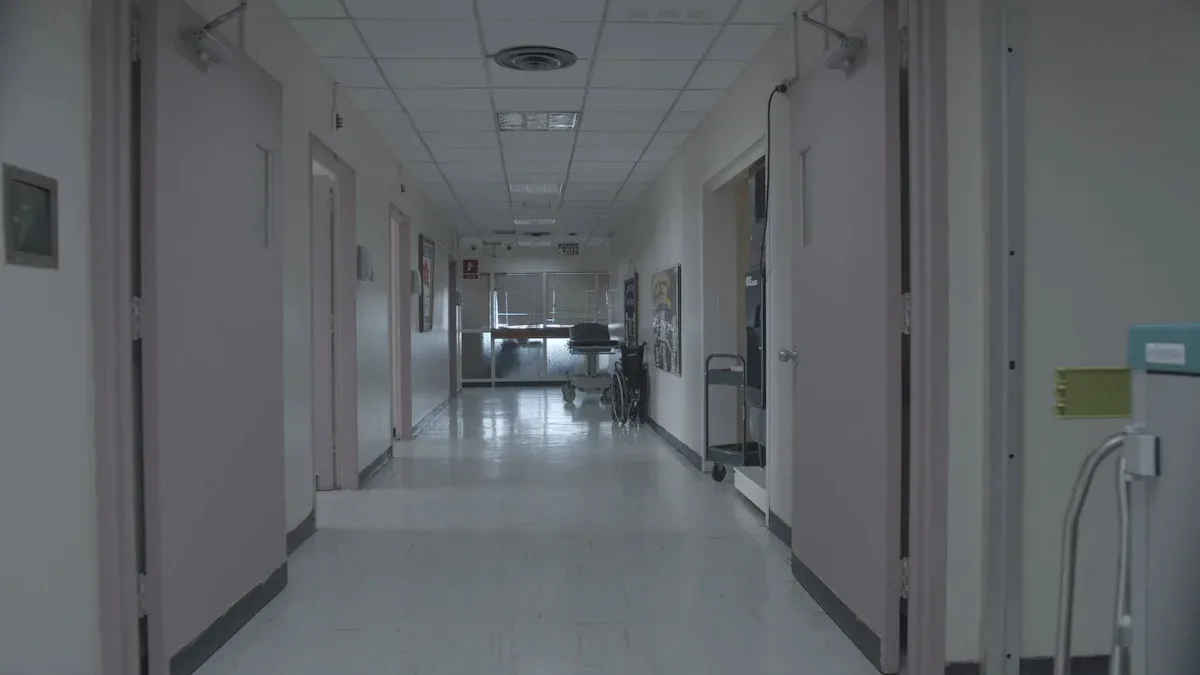
Checking hospital fire door systems often keeps them working well. NFPA 80 says doors must be checked every year. Staff must write down the date and who did the check. Inspectors look for clear labels, no holes, and no broken glass. They also make sure all parts work right. Doors must close and lock the right way. Even small things, like a missing screw, can make a door fail. Hospitals use computers to plan checks and fix problems. Trained staff or a team help checks stay the same each time. Written records help groups like The Joint Commission see if hospitals are safe.
Note: In 2023, there were about 1.39 million fires in the U.S. These fires caused $23 billion in damage. Checking fire doors often helps keep people and hospital buildings safe.
Common Issues
Many hospital fire door checks find lots of problems. The Fire Door Inspection Scheme found 75% of fire doors did not pass. Healthcare buildings had some of the worst results. Some common problems are:
- Gaps that are too big between the door and frame (77%)
- Not enough care or fixing (54%)
- Problems with smoke seals (37%)
- Doors put in the wrong way (31%)
Other problems are missing or broken parts, holes, and broken closers. If gaps are bigger than 3mm, smoke and light can get through. This makes the door not work as well. Doors used a lot need more checks because they break faster.
Staff Responsibilities
Hospital staff help keep fire doors safe. The ASHE Fire Door and Egress Inspection Checklist helps staff check every part. Staff should:
- Check busy doors every week and main halls every month.
- Look for gaps over 4 mm and fix broken seals fast.
- Write down all checks and repairs in a log or computer.
- Tell the maintenance team about problems right away.
One person must make sure all checks are done on time. Training and clear rules help staff keep fire doors safe and working.
Fire Door Safety Tips
Daily Checks
Staff play a key role in keeping fire doors safe every day. They should look at each door to make sure it closes fully and latches without sticking. Staff need to check for gaps around the door, loose hinges, or missing labels. If a door has a wedge or is propped open, staff must remove it right away. A simple checklist helps staff remember what to look for. Many hospitals use a logbook or digital app to track these checks. Quick daily checks help spot problems before they become serious.
Tip: Staff should never block fire doors or leave them open. Closed doors slow down fire and smoke, giving everyone more time to escape.
Reporting Problems
When staff see a problem with a fire door, they must report it right away. Fast reporting helps the maintenance team fix issues before an emergency happens. Hospitals often use a simple form or app for this. Staff should write down the door’s location, the problem, and the date. Clear reporting makes it easier to track repairs and keep everyone safe. Staff should also report if they see someone blocking a fire door or removing safety signs.
| What to Report | How to Report |
| Broken closers | Fill out a form |
| Large gaps | Use a mobile app |
| Missing labels | Call maintenance |
| Blocked doors | Tell supervisor |
Training and Awareness
Training helps staff know what to do in a fire emergency. Studies show many hospital workers do not know emergency numbers or how to use firefighting tools. In one study, only 28% of staff took part in fire drills. Hospitals need strong training programs to close these gaps. Good programs use several steps:
- Test staff knowledge before training starts.
- Use quizzes, drills, and role-play to teach skills.
- Watch staff after training to see if they follow safety rules.
- Ask staff for feedback and ideas to improve safety.
- Track key numbers like drill attendance and response times.
These steps help staff remember what to do and act fast in an emergency. Regular training and practice build confidence and keep everyone safer.
Fire doors are very important for hospital safety. Hospitals need to check and fix each door often. This helps them follow the rules and keep people safe. Many checks show that some doors do not pass safety tests. This makes things more dangerous. Staff must learn how to care for fire doors and work together. Keeping good records and working with safety teams helps make hospitals safer.
FAQ
How often should hospital fire doors get inspected?
NFPA 80 requires hospitals to inspect fire doors at least once a year. Many hospitals check high-traffic doors more often. Regular inspections help staff find problems early and keep everyone safe.
What makes a door “fire-rated”?
A fire-rated door uses special materials and passes strict tests. Labels on the door show its fire rating, such as 30, 60, or 90 minutes. These doors slow down fire and smoke, protecting people and property.
Who can repair or replace hospital fire doors?
Only trained and qualified professionals should repair or replace fire doors. They follow safety codes and use approved parts. Staff should report any damage right away so experts can fix it.
Can staff prop open fire doors during busy times?
Alert: Staff should never prop open fire doors. Open doors let fire and smoke spread quickly. Closed fire doors protect patients, staff, and visitors.
What should staff do if they find a problem with a fire door?
Staff should report the problem to the maintenance team right away. Many hospitals use a form or app for fast reporting. Quick action helps keep the hospital safe for everyone.


